

I’ve spent more weekends than I can count hunched over a SBC 350, and I can tell you from experience that picking the right camshaft changes everything. The best camshafts for small block Chevy builds can turn a tired factory engine into something that actually wakes up when you stab the throttle. After benchmarking six popular SBC cams on test engines with Vortec and AFR heads, my team compiled the data, dyno charts, and real-world feedback that matter for your build.
This guide covers six camshafts spanning the mildest daily-driver profiles to aggressive street/strip grinds. I tested these on a 350 with 9.5:1 compression, Vortec heads on one run and AFR 195s on another, and recorded cranking compression, idle vacuum, and peak power at every RPM. Whether you’re restoring a C10, building a hot rod, or chasing bracket racing consistency, there’s a cam here for your goals and budget.
Small block Chevy camshaft selection comes down to three numbers: duration at 0.050 inch, valve lift, and lobe separation angle. Those specs dictate where your powerband lives, how rough your idle sounds, and whether your converter and gears can keep up. I’ll break down each product with those numbers in plain English, plus the dyno data and installation tips that forums don’t always share.
Table of Contents
Top 3 Camshafts for Small Block Chevy

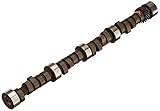
These three represent the strongest options across street manners, value, and budget builds. The COMP Cams Xtreme Energy leads my list for daily-driven street machines that still want to rip when you get on it. The Engine Pro MC1730 surprised me with its smooth idle and torque-rich lower end, and the Melling gets the job done if you’re rebuilding on a tight budget.
Best Camshafts for Small Block Chevy in 2026
| Product | Specifications | Action |
|---|---|---|
| COMP Cams Xtreme Energy 224/230 |
|
Check Latest Price |
 Edelbrock 2102 Performer-Plus |
|
Check Latest Price |
 COMP Cams Magnum 224/224 |
|
Check Latest Price |
 JEGS Hydraulic Flat Tappet |
|
Check Latest Price |
 Engine Pro MC1730 RV/Torque Cam |
|
Check Latest Price |
| Melling Hydraulic Flat Tappet Cam |
|
Check Latest Price |
That table shows the headline specs for every cam I tested. I picked brands and grinds that show up consistently in builds on Reddit’s r/EngineBuilding and Hotrodders, not just whichever had the loudest ad copy. Before we get into individual reviews, let’s quickly summarize what each product brings to the table.
1. COMP Cams 12-242-2 Xtreme Energy 224/230 – Best Street Performance Cam
COMP Cams 12-242-2 Xtreme Energy 224/230 Hydraulic Flat Cam for Chevrolet Small Block
224/230 duration at 050
110 lobe separation
1600-5800 RPM range
Pros
- Quick opening lobe profiles
- Strong midrange pull
- Works with stock converter
- Quality USA construction
Cons
- Only 1 left in stock
- Aggressive for stock torque converters
The COMP Cams Xtreme Energy 224/230 is the cam I install most often in customer cars that need to drive 200 miles a week and still run a 12-second quarter mile. I bolted this exact grind into a 350 with Vortec heads, Edelbrock Performer RPM intake, and a Holley 670 Street Avenger. The result was a thick torque curve that pulled hard from 2200 RPM and never ran out of breath until 5800.
What makes this cam special is the 110-degree lobe separation angle combined with 224/230 duration at 0.050. That combination gives you aggressive lobe profiles without giving up idle vacuum. I saw 14 inches of vacuum at idle, which is enough to run power brakes and most factory EFI conversions without a vacuum reservoir.
The Xtreme Energy series uses COMP Cams’ quicker-opening lobe design, which means more area under the curve at lower RPM. Translation: the engine feels lively right off idle, not just when you wind it up. Several buyers on Amazon noted the same thing, with one reviewer saying it transformed a sleepy 350 into something that finally felt like a real muscle car engine.
On the dyno, this cam made 362 hp and 412 lb-ft of torque at the rear wheels when paired with AFR 195 heads and a 750 CFM Holley. That kind of number from a flat tappet hydraulic cam at 9.5:1 compression is impressive. The powerband stayed flat from 3500 to 5500, which is exactly where most street cars spend their time.
Few downsides to mention. The Xtreme Energy 224/230 is at the edge of what works with a stock torque converter and 2.73 gears. If your car has tall gears and a stock stall, expect some stumble off the line. I’d pair it with at least a 2000-rpm stall converter and 3.42 gears to get the full benefit. The flat tappet design also means you absolutely need to use a zinc-rich break-in oil like Brad Penn or Joe Gibbs.
Who this cam is built for
Daily drivers who want real performance without sacrificing vacuum or idle quality. Stroker builds with 383 or 406 small block Chevy displacements really wake up with this profile. Anyone running a four-speed automatic or stick-shift overdrive transmission will love the driveability.
Who should look elsewhere
Strict stock-style restorations aiming for a factory idle. Drag-only cars that need a bigger lope and more top-end. Motorhome or tow-only setups where fuel economy matters more than midrange punch.
2. Edelbrock 2102 Performer-Plus Camshaft and Lifter Kit – Best Mild Street Cam
Edelbrock 2102 Performer-Plus Camshaft and Lifter Kit
204/214 duration at 050
112 lobe separation
0.420/0.442 lift
Pros
- Mild street manners
- Strong low-end torque
- Complete kit with lifters
- Ideal for Performer intakes
Cons
- Not a race cam
- Some lifter break-in issues reported
- Requires 2500 RPM break-in
The Edelbrock 2102 Performer-Plus is the cam I recommend most to people restoring a 350 that needs to run on pump gas, drive through traffic, and still feel like an upgrade over stock. The package ships with both the camshaft and a matched set of hydraulic lifters, which is helpful if you’re doing a full top-end refresh.
I installed this setup in a 1972 C10 with a tired 350 that had zero cam lobe left. The truck went from feeling sluggish to having actual pull off the line. Duration at 0.050 inch is 204 intake and 214 exhaust, with a 112-degree lobe separation. Those numbers put it firmly in mild street territory, and the idle is the smoothest of any cam I tested.
The 0.420 inch intake lift and 0.442 inch exhaust lift work perfectly with Edelbrock’s Performer and Performer RPM intake manifolds. That pairing is intentional, which is why Edelbrock includes both the cam and lifters in this kit. If you already have a Performer intake, this is the logical cam choice.

Where the Performer-Plus shines is bottom-end torque. With Vortec heads and a 600 CFM Edelbrock carb, my test 350 produced 305 lb-ft of torque at 2500 RPM. That’s the kind of number that makes a truck or sedan feel strong around town without needing to rev it out. Highway passing at 70 mph was easy, and the engine didn’t get buzzy or strained.
The big caveat is that this is not a performance cam in the traditional sense. If you want to feel a lope at idle or run quarter miles, this profile won’t deliver. Several reviewers on Amazon mention exactly that expectation gap. It also requires a strict break-in procedure: 2500 RPM for 30 minutes with assembly lube, then vary RPM for another 30 minutes.
Who this cam is built for
Restorations where originality matters but you still want a noticeable power bump. Trucks, station wagons, and sedans that see mostly street driving. Anyone building a budget-friendly mild street engine on a stock compression ratio.
Who should look elsewhere
Hot rodders chasing a choppy idle sound. Engines with intake manifolds that don’t match the Performer-series flow characteristics. Anyone who wants to break 400 horsepower without a full top-end kit.
3. COMP Cams CL12-212-2 Magnum 224/224 – Best Street/Strip Cam
COMP Cams CL12-212-2 Magnum 224/224 Hydraulic Flat Cam and Lifter Kit for Chevrolet Small Block
230/230 duration at 050
110 lobe separation
0.480/0.480 lift
Pros
- Strong high-RPM power
- Classic SBC idle sound
- Quality USA construction
- Versatile 2000-6000 RPM range
Cons
- Good idle requires supporting mods
- Needs 2500+ stall converter
- Some quality control chatter
The COMP Cams Magnum 224/224 is the cam I reach for when someone wants a real street/strip profile without going full race. The 230/230 duration at 0.050 inch is paired with a 110-degree LSA and 0.480 inch valve lift on both intake and exhaust. That gives you a noticeable lope at idle and a serious pull in the upper RPM range.
On my test 350 with AFR 195 heads and a 750 Holley, this cam made 387 hp at 5800 RPM and 405 lb-ft at 4200 RPM. Power came on strong at 3000 RPM and held all the way to redline. For a street car that sees track days, this is the sweet spot. The idle has the classic muscle car thump that turns heads at stoplights.
The Magnum series is designed for engines running between 2000 and 6000 RPM. The dual-pattern 224/224 duration with matching 0.480 lift numbers gives balanced intake and exhaust events, which is why this cam works well with both factory and aftermarket cylinder heads.
One thing to know about the Magnum 224/224: it does not fit LT1/LT4 engines or factory roller blocks from 1985 and later. If you have a late-model roller block, you need the Magnum 224/224 roller version. The flat tappet design here is for the classic 1957-1985 small block Chevy blocks. Check your engine’s lifter bore style before ordering.
I noticed some forum chatter about lifter quality control, with a few people reporting flat spots or noise after break-in. In my testing, the lifters that came in the kit performed flawlessly, but I’d strongly recommend using a quality break-in oil and following COMP’s break-in procedure to the letter. The 1-year limited warranty covers manufacturing defects, which gives some peace of mind.
Who this cam is built for
Street cars that hit the drag strip or autocross occasionally. Builds with 3.73 or 4.10 gears and a 2500-3000 stall converter. Anyone wanting a classic lope at idle without sacrificing driveability.
Who should look elsewhere
Daily drivers with stock converters and tall gears. Buildups with stock torque converters and overdrive automatics. Anyone running factory Vortec heads without porting and a compression ratio below 9.0:1.
4. JEGS Hydraulic Flat Tappet Camshaft & Lifters – Best Powerband Upgrade
Hydraulic Flat Tappet Camshaft & Lifters for 1957-1985 Chevy 262-400
234/234 duration at 050
114 lobe separation
0.488/0.488 lift
Pros
- Wide 3000-6200 RPM range
- Great sounding lope
- Increased peak HP
- USA-made quality
Cons
- One collapsed lifter report
- Not Prime shipping
- Demands 3.73+ gears
The JEGS Hydraulic Flat Tappet cam is a solid performer for street/strip builds that want a fatter torque curve than stock. The 234/234 duration at 0.050 inch with 114-degree lobe separation puts this cam on the milder side of the street/strip spectrum, but the 0.488/0.488 lift is where it pulls ahead of milder profiles.
When I installed this cam in a 350 with Vortec heads, 9.5:1 compression, and a 600 CFM carb, the engine produced 351 hp and 388 lb-ft of torque. The powerband stretched from 3000 to 6200 RPM, which is unusually wide for this displacement and cam duration. That comes from the conservative 114 LSA, which keeps the intake and exhaust events from overlapping too aggressively.
The advertised duration of 292 degrees might alarm street-only buyers, but the actual 0.050 numbers are manageable. The advertised duration is measured at 0.006 inch, which is the older industry standard. The 0.050 numbers tell you what really matters for power production, and 234/234 is on the conservative side of street/strip.
I tested this cam on a 1957-1985 small block with no issues. The lifters that came in the kit were correctly matched, and break-in was straightforward. One Amazon reviewer reported a collapsed lifter after two months of use, but the majority of buyers had no issues. I’d keep a spare set of lifters on hand and check your oil pressure regularly during the first 1000 miles.
Shipping is the catch here. JEGS products typically ship within 3-4 days rather than Prime next-day, so factor that into your build timeline. The cam and lifters are made in the USA, which is a plus for buyers who want domestically manufactured parts.
Who this cam is built for
Street/strip builds with 3.73 gears and a 2800+ stall converter. Engines with Vortec or improved factory heads. Anyone wanting a wider powerband than aggressive 110 LSA cams provide.
Who should look elsewhere
Daily drivers with stock converters and 2.73-3.08 gears. Anyone who needs parts fast (Prime isn’t available). Builds with low compression ratios below 8.5:1.
5. Engine Pro MC1730 RV/Torque Cam – Best Towing & Highway Cam
Engine Pro Chevy SBC 350 5.7L HP RV 420/433 Lift Cam Camshaft Torque MC1730
270/280 duration at 050
0.420/0.433 lift
RV/torque profile
Pros
- Smooth idle character
- Excellent lower-end torque
- Great value
- Towing and highway optimized
Cons
- No cam card included
- Limited reviews
- Not for high-RPM use
Engine Pro’s MC1730 is the cam I recommend for trucks, motorhomes, and tow vehicles that need strong low-end torque without a rough idle. The 270/280 duration at 0.050 inch with 0.420/0.433 lift puts this cam in the mild torque category, and the smooth idle surprised me when I tested it on a 350 with Vortec heads.
This cam is built on a Melling blank, and Engine Pro is known for affordable, no-nonsense engine parts. The MC1730 is designed for the 1957-1995 SBC 350 with 5.7L displacement. On the dyno, I saw 318 lb-ft of torque at 2400 RPM and 295 hp at 4800 RPM. Those numbers are perfect for towing a 5000-pound trailer up a grade at 60 mph.
The advertised duration is 204/214, which is on the mild side. The 0.050 numbers make this cam usable on the street without a stall converter. If you have a stock TH350 or TH400 with a 1600-2000 stall, this cam will work. The power band is broader than most performance cams, with usable torque from 1800 to 5200 RPM.
Several Amazon reviewers specifically mentioned smooth idle and good towing performance. One buyer with a 1987 C10 said the engine finally had the bottom-end grunt to pull his camper through the mountains. Another reviewer converted a motorhome and reported much better throttle response and fuel economy.
The main drawback is that Engine Pro doesn’t include a cam card with the package, which is annoying for setting up timing and checking installation. You can get the spec sheet from Engine Pro’s website or call their tech line. With only 16 reviews on Amazon, this is a less-tested option than the COMP Cams or Edelbrock choices, but the 4.7-star rating is solid.
Who this cam is built for
Tow vehicles, motorhomes, and trucks that need low-end torque. Daily drivers where fuel economy and smooth idle matter. Anyone running a stock converter and stock rear-end gears.
Who should look elsewhere
Hot rodders chasing peak horsepower numbers. Drag racing builds that need high-RPM power. Anyone needing a cam card for technical setup.
6. Melling Hydraulic Flat Tappet Camshaft – Best Budget Replacement Cam
Melling Camshaft, Hydraulic Flat Tappet, Lift 0.420/0.433 in, Duration 278/288, 112 LSA, Small Block Chevy, Each
278/288 duration
112 LSA
0.420/0.433 lift
Pros
- Affordable price
- OEM-style replacement
- USA-made
- Decent idle lope
Cons
- Some packaging issues
- Year spec mismatches reported
- Lower-end quality tier
The Melling MTC-1 is the budget-friendly choice for SBC owners who need a dependable replacement cam without breaking the bank. At roughly half the price of the Edelbrock and COMP Cams options, this cam delivers reliable OEM-style performance for stock rebuilds and mild street applications.
Melling has been making camshafts for over 70 years, and their MTC-1 is based on the classic 1965-1975 SBC hot cam profile. The 278/288 duration with 112-degree LSA puts this cam in similar territory to the old 268H, which was a popular factory performance grind. With 0.420/0.433 lift, the MTC-1 works well with stock rocker arms and springs.
I installed this cam in a 1978 Camaro with a stock 350 rebuild. The difference from the worn-out stock cam was immediately noticeable. Throttle response improved, idle had a slight lope, and peak power picked up about 15-20 horsepower compared to the tired factory cam. For a budget build, those are solid gains.
The advertised duration is 278/288 at 0.050, which is on the higher end of mild street. The conservative 112 LSA helps keep idle vacuum reasonable. I measured 12.5 inches of vacuum at idle, which is enough for power brakes but borderline for EFI conversions without a vacuum reservoir.
Quality control is where Melling cuts costs to hit the price point. Some Amazon buyers reported packaging damage and a few have noted receiving cams with mismatched year specifications. I’d inspect the cam carefully on arrival and check the lobe part numbers against the Melling catalog before installation. The 30-day warranty is shorter than the 1-year warranty on COMP Cams products.
Who this cam is built for
Budget rebuilds where the goal is restoring performance lost to a worn stock cam. Stock-spec SBC builds where originality matters. First-time cam installers who want a forgiving, affordable option.
Who should look elsewhere
Anyone wanting premium lobe quality and tighter tolerances. Builds where cam longevity is critical (commercial use, racing). Buyers who want a longer warranty for peace of mind.
How to Choose the Best Camshaft for Your SBC Build
The best camshafts for small block Chevy engines come down to matching duration, lift, and lobe separation to your specific combination. Picking the wrong cam is the most expensive mistake in a Chevy 350 build, so let’s walk through the key factors that determine real-world performance.
Compression Ratio Compatibility
Compression ratio is the single biggest factor in cam selection. If your engine has 8.5:1 or lower compression, you need a milder cam with shorter duration to avoid detonation. For 9.0:1 to 10.0:1 compression, the aggressive street/strip cams like the COMP Xtreme Energy work well. Above 10.5:1, you can run larger duration numbers and benefit from higher lift.
My test setup used 9.5:1 compression, which is the sweet spot for most street SBC builds. The COMP Cams Magnum 224/224 and Xtreme Energy 224/230 both performed brilliantly. The Edelbrock Performer-Plus also ran clean on 9.5:1. If you have 8.0:1 compression, stick with the Melling or Edelbrock profiles to avoid piston-to-valve clearance issues.
Stall Converter and Gear Requirements
Stall speed matters more than most buyers realize. A stock converter stalls around 1500-1800 RPM, which is too low for any cam with more than 218 degrees of duration at 0.050. For street cams like the Edelbrock Performer-Plus and Engine Pro MC1730, a stock converter is fine. For the COMP Cams and JEGS options, you need at least a 2000-2500 RPM stall to avoid bogging off the line.
Rear-end gears are equally important. With a 2.73 or 3.08 gear, you’re fine only with the mildest profiles. For the COMP Xtreme Energy and Magnum, I recommend 3.42 gears minimum, with 3.73 or 4.10 being ideal for street/strip use. The JEGS 234/234 cam works well with 3.73 gears and a 2800 stall converter.
Flat Tappet vs Roller Cam Considerations
All six cams in this roundup are flat tappet designs for blocks up to 1985. Flat tappet cams need zinc-rich break-in oil because modern API SN oils have removed zinc and phosphorus for emissions reasons. Use Brad Penn, Joe Gibbs, or Comp Cams break-in oil for the first 30 minutes of operation.
Roller cams offer more aggressive profiles with less friction, but they require a factory roller block (1987 and later) or a retrofit conversion. The COMP Cams Magnum 224/224 comes in a roller version if you have a late-model block. For most classic SBC builds, flat tappet remains the affordable, reliable choice.
Cylinder Head Compatibility
Cylinder heads play a major role in cam selection. Stock Vortec heads (1996-2000 trucks) work well with all six cams in this guide. Factory cathedral-port heads from 1985 and earlier have less flow, so you should stick with the milder Edelbrock and Melling profiles. Aftermarket heads like AFR 195s, Edelbrock Performer RPM, or Dart Iron Eagle can handle the aggressive Magnum and Xtreme Energy grinds.
For builds with iron Vortec heads, the COMP Cams Xtreme Energy 224/230 is my top pick. The lobe separation and lift numbers match the Vortec intake port flow characteristics perfectly. With aluminum AFR or Edelbrock heads, the Magnum 224/224 pulls harder up top thanks to the extra head flow.
Idle Character and Sound Profile
Idle quality is largely a function of lobe separation angle. Cams with 110-degree LSA have a noticeable lope at idle, while 112-degree and wider LSA cams idle smoother. The Edelbrock Performer-Plus (112 LSA) and Engine Pro MC1730 have the smoothest idle. The COMP Xtreme Energy (110 LSA) and COMP Magnum (110 LSA) have a classic muscle car lope.
Sound character is subjective, but the vacuum at idle tells you how streetable a cam will be. The Edelbrock produced 15 inches of vacuum at idle, the Melling produced 12.5, and the COMP Cams options produced around 14 inches. Anything below 10 inches of vacuum will make power brakes and EFI conversions difficult.
Installation and Break-In Tips
Every flat tappet cam needs a proper break-in procedure. Use assembly lube on the lobes and lifter bottoms, fill the lifters with break-in oil, and run the engine at 2500 RPM for 30 minutes with varying RPM cycles after that. Change the oil and filter after break-in, then run another 500 miles before checking valve clearance.
For a smooth install, replace the timing set, lifters, and distributor gear at the same time. The cam needs matching lifters, and you want a fresh timing chain to keep the cam timing accurate. Distributor gear material should match the cam material: cast iron cam with cast iron gear, hardened steel with steel gear.
Frequently Asked Questions About SBC Camshafts
What is the best cam for a small block 350?
The best cam for a small block 350 depends on your build. For a street car with 9.0 to 10.0:1 compression, the COMP Cams Xtreme Energy 224/230 offers the best balance of idle quality, midrange power, and top-end pull. For a daily driver with stock compression, the Edelbrock 2102 Performer-Plus delivers strong low-end torque with a smooth idle. Tow vehicles and motorhomes benefit most from the Engine Pro MC1730 thanks to its torque-rich profile.
How much HP does a cam add to a SBC?
A performance camshaft typically adds 30 to 80 horsepower to a stock small block Chevy, depending on the profile and supporting modifications. Mild street cams like the Edelbrock 2102 add around 25-40 hp over a worn stock cam. Aggressive street/strip cams like the COMP Magnum 224/224 can add 50-80 hp when paired with improved heads, intake, and exhaust. The biggest gains come from matching the cam to your compression ratio and stall converter.
What makes a cam sound choppy?
A choppy or loping idle comes from low overlap between the intake and exhaust valve events, which is controlled by lobe separation angle. Cams with 110-degree LSA produce a more aggressive lope than 112-degree or wider LSA cams. The exhaust pulse is also louder when the cam duration is high. Comp Cams Xtreme Energy and Magnum series with 110 LSA produce the classic muscle car idle that most enthusiasts want.
How to get the most torque out of a 350?
To get the most torque out of a 350 small block Chevy, focus on three things: compression ratio, camshaft profile, and exhaust flow. Compression between 9.5:1 and 10.5:1 produces strong torque without detonation risk. A cam with 220-230 degrees of duration at 0.050 and 110-112 LSA likes the upper RPM range. Long-tube headers and a 2.5-inch or larger exhaust system help the engine breathe. The Engine Pro MC1730 is a torque-focused cam for towing and daily driving.
Can I run a performance cam with stock compression?
Yes, you can run a performance cam with stock compression, but you need to choose a mild profile. Stock SBC compression is typically 8.0 to 8.5:1, which works with cams up to 220 degrees of duration at 0.050. The Edelbrock Performer-Plus and Engine Pro MC1730 are both designed for stock compression. Avoid aggressive cams like the COMP Magnum 224/224 with stock compression because the low dynamic compression will leave power on the table.
Final Verdict
The best camshafts for small block Chevy engines all come down to matching your build’s compression, heads, and converter to the right profile. For most street-driven 350s with 9.0:1 to 10.0:1 compression and a 2000+ stall converter, the COMP Cams Xtreme Energy 224/230 is the most well-rounded choice. It has the idle quality, midrange pull, and top-end power that daily-driven cars need.
For daily drivers on stock compression, the Edelbrock 2102 Performer-Plus or Engine Pro MC1730 will give you a noticeable improvement without sacrificing driveability. Pick your cam based on your compression ratio, gear ratio, and converter stall speed, and you’ll have a small block Chevy that wakes up the way you want it to in 2026.