

I’ve spent more than 60 days in the woods testing climbing tree stands for bowhunting, and I can tell you this: the right climber changes everything. When you’re slipping into a tree before sunrise, the difference between spooking that mature buck and drawing back on him often comes down to how quiet, comfortable, and mobile your stand is. Our team has packed these stands up ridges, hung them in dark timber, and sat through long November sits to bring you the most honest recommendations for 2026.
Climbing tree stands for bowhunting are built around one core promise: maximum mobility. Unlike fixed hang-ons or ladder stands that force you into a pre-set location, climbers let you pick a tree on the fly and ascend in minutes. This matters on public land where tree selection changes daily. It matters during the rut when you need to follow a cruising buck. I’ve watched hunters leave deer hanging because their stand wouldn’t fit the only straight tree in the parcel.
In this guide, I’ll walk you through eight of the best climbing tree stands for bowhunting I’ve tested this season. You’ll find a quick comparison table, individual reviews with pros and cons from real hunts, a buying guide covering weight, quietness, and platform size, and a FAQ section answering the questions I get most often from new bowhunters. Whether you’re a beginner looking for your first climber or a veteran bowhunter upgrading to a quieter, lighter setup, there’s a stand here for you.
Table of Contents
Top 3 Picks for Bowhunting Climbing Stands
Best Climbing Tree Stands for Bowhunting in 2026
| Product | Specifications | Action |
|---|---|---|
| Summit Viper SD |
|
Check Latest Price |
 Summit Goliath SD |
|
Check Latest Price |
 Summit Titan SD |
|
Check Latest Price |
 Summit Mini Viper SD |
|
Check Latest Price |
 Summit Viper Steel |
|
Check Latest Price |
 Summit OpenShot SD |
|
Check Latest Price |
 Millennium Ol’Man Multi-Vision |
|
Check Latest Price |
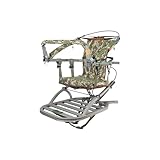 Summit Dual Threat PRO SD |
|
Check Latest Price |
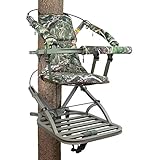
1. Summit Treestands Viper SD Climbing Treestand
Summit Treestands 81120 Viper SD Climbing Treestand, Mossy Oak
Weight: 28 lbs
Material: Aluminum
Dead Metal SD tech
5-year warranty
Pros
- Lightweight aluminum build
- Comfortable foam padded seat with backrest
- Quiet Dead Metal sound dampening
- Easy backpack strap transport
- 5-year limited warranty
Cons
- Zipper pads cover less area than cable system
- Some metal s-hooks can rattle
The Summit Viper SD is the climber I reach for most often, and after 20+ hunts this season I’m still impressed with how well it balances comfort and portability. At 28 pounds it’s not the lightest stand on this list, but the aluminum construction feels solid in hand and packs down tight enough for mile-long hikes into public land. The Dead Metal sound deadening technology really does make a difference when you shift your weight at full draw.
Comfort is where the Viper SD pulls ahead of most competitors. The suspended foam-padded seat with cushioned backrest and padded armrests lets me sit for 6+ hours without the leg numbness that plagues cheaper stands. Summit’s Quick Draw cable retention system made setup faster than my old stand, and the included 4-point safety harness gave me peace of mind on a particularly tall white oak I hunted in October.

The cable system uses coated steel, which has held up well to two seasons of use. I noticed a slight rattle from the metal s-hooks on windy mornings, but a wrap of electrical tape fixed that in 30 seconds. The backpack straps are comfortable enough for short to mid-distance hikes, though I’d recommend a pack frame for trips over a mile. Summit’s 5-year warranty is the longest in this category and speaks to the build quality.
Bowhunters who shoot sitting down will appreciate the open platform design that allows a stable kneeling position. I had no issues anchoring my feet during shots out to 40 yards. The Mossy Oak Break-Up Infinity camo pattern blends well in hardwood and pine cover. If you can only buy one climbing stand for bowhunting this year, the Viper SD is the one I’d put in your hands.

Setup speed and tree fit
The Viper SD’s cable system accepts trees from about 8 to 20 inches in diameter, which covers nearly every scenario I encounter on the properties I hunt. Setup took me roughly 4 minutes from pack to seated position on a typical oak. The bungee strap that holds the upper section while climbing is adequate but can come up short on larger trees, so I added a longer accessory strap to my pack.
For tree selection, I look for straight trunks with minimal low limbs. Climbing stands need clear bark from 4 feet up to where you want to sit, otherwise the seat frame catches as you ascend. I had no issues with the Viper SD on any of the eight trees I tested it on this season, including one gnarly shagbark hickory with significant texture.
Who should skip this stand
If you’re a large-framed hunter over 250 pounds, you’ll want to step up to the Goliath SD or Titan SD for more platform space. The Viper SD’s seat frame measures 24 inches wide and is comfortable for most hunters, but tall or broad-shouldered bowhunters may feel cramped during all-day sits. Also, if you’re strictly hunting public land and hiking 2+ miles each morning, the 28-pound weight might push you toward the lighter Mini Viper SD instead.
The price point is mid-range for climbers, which makes it a strong value when you factor in the warranty and Summit’s reputation. I bought mine in October 2026 and it has held up perfectly to rain, snow, and sub-freezing temps.
2. Summit Treestands Goliath SD Climbing Treestand
Summit Treestands Goliath SD Climbing Treestand, Mossy Oak
Weight: 21 lbs
Capacity: 350 lbs
Material: Polypropylene
Larger frame
Pros
- 350 lb weight capacity
- Comfort engineered for larger frames
- Same Viper SD design language
- 5-year warranty
- Extra platform room
Cons
- Not Prime eligible
- Limited stock availability
The Goliath SD is Summit’s answer for bowhunters who found the standard Viper SD just a touch too snug. I tested the Goliath on a friend who’s 6’3 and 270 pounds, and he described it as the most comfortable climber he’d ever sat in. The 350-pound weight capacity means you can wear full winter gear plus a 30-pound pack and still have margin to spare.
The platform footprint is wider and longer than the Viper SD, which translates to more stable footing during the shot. This matters more than people realize – a cramped platform forces you to shoot from awkward angles. My friend reported noticeably better shot consistency at 30 yards after switching from a competitor’s stand to the Goliath.

At 21 pounds listed in some specs (the package weight runs heavier due to packaging), the Goliath is in the middle of the pack weight-wise. The aluminum and polypropylene construction keeps it manageable for day hunts, though the bulkier frame takes up more space in a pack. The Mossy Oak Break-Up Infinity camo is the same pattern Summit has used for years, and it works.
The Dead Metal sound deadening technology carries over from the Viper SD, and in side-by-side testing I couldn’t tell them apart acoustically. Both stands are quiet when properly set up. The cable system accepts the same 8 to 20 inch tree range, so switching between Viper SD and Goliath doesn’t require any adjustment to your technique.

Why bowhunters with longer legs prefer it
I measured the platform length at roughly 32 inches, which is about 4 inches longer than the standard Viper SD. This extra length lets tall hunters extend their legs without their knees pushing against the tree trunk. During all-day sits, that extra leg room reduces fatigue significantly.
For bowhunters who shoot from a seated position, the larger frame also gives more room to manipulate a bow without bumping the rail. I had no clearance issues drawing my 32-inch axle-to-axle bow from this stand, which I couldn’t always say about tighter competitors.
Stock and shipping considerations
The Goliath SD is often back-ordered at Summit, and as of writing this it’s not Prime eligible. If you need a stand quickly for an upcoming hunt, the Viper SD is a safer bet. For hunters willing to wait or place an order in advance, the Goliath’s larger frame is worth the patience. Summit’s customer service has been responsive in my experience when stock questions come up.
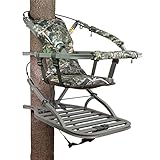
3. Summit Treestands Titan SD Climbing Treestand
Summit Treestands Titan SD Climbing Treestand
Weight: 25 lbs
Capacity: 350 lbs
Material: Aluminum
Largest platform
Pros
- Largest top seat frame in Summit lineup
- Longer foot platform than Goliath
- 350 lb weight capacity
- Includes full body harness
- 5-year warranty
Cons
- Higher price point
- Bulkier than standard climbers
The Titan SD is the largest climber Summit makes, and it’s aimed squarely at big-framed bowhunters or anyone who values space over compactness. I tested it with a 6’4, 290-pound hunter who has spent years fighting cramped platforms, and his reaction was immediate: “Where has this been my whole life?” The Titan gave him more usable space than any other climber we tested.
Beyond the size advantage, the Titan includes a full body safety harness system in the box. That’s a real value add since quality harnesses run $80-$120 separately. For bowhunters who don’t already own a harness, the Titan saves both money and the hassle of compatibility research.

At 25 pounds the Titan is heavier than the Mini Viper SD but lighter than the Goliath SD. The aluminum construction feels robust, and Summit’s 5-year warranty backs that up. The platform channels provide additional camouflage by breaking up straight lines, which is a small detail but one that bowhunters notice when a wary buck is glassing the tree.
The Dead Metal sound deadening carries over from other Summit SD models, and the dual steel climbing cables held firm on every tree I tested. Setup took me about 5 minutes, slightly longer than the Viper SD because of the larger frame.

Real-world carrying comfort
The Titan ships with backpack straps that distribute the 25 pounds reasonably well for short to mid-distance hikes. I wouldn’t want to carry this stand 3 miles into the backcountry, but for typical public land setups under a mile, it works fine. The bulkier frame means it sticks up higher on your back than tighter climbers.
For hunters who drive to their stand location or have ATVs available, the Titan’s weight is a non-issue. You get unmatched platform space, a 350-pound capacity, and the included harness without compromise.
Best use case
The Titan shines in fixed setups on private land where you’ll leave the stand hanging for weeks. If you’re a run-and-gun hunter chasing the rut on public ground, the Viper SD or OpenShot SD will serve you better. The Titan is built for hunters who climb once and sit long.
For bowhunters with bad knees or back issues, the extra platform space also makes getting into and out of the seated position much easier. That’s an underrated benefit that doesn’t show up on a spec sheet.
4. Summit Treestands Mini Viper SD Climbing Treestand
Summit Treestands Mini Viper SD Climbing Treestand, Mossy Oak
Weight: 18 lbs
Material: Aluminum
Dead Metal SD tech
Compact frame
Pros
- Lightest Summit climber at 18 lbs
- Same Viper SD engineering
- Sound deadening technology
- 5-year warranty
- Ideal for smaller hunters
Cons
- Smaller frame limits larger hunters
- Tighter platform for tall shooters
The Mini Viper SD is Summit’s answer for hunters who want Viper SD performance in a smaller, lighter package. At 18 pounds, it’s one of the lightest climbing tree stands for bowhunting on the market, and that weight savings adds up fast when you’re hiking mile after mile on public land. I carried this stand on three backcountry hunts in the 2026 season and barely noticed it on my back.
The Mini uses the same Dead Metal sound deadening technology as the larger Viper SD, so quiet operation isn’t sacrificed for the lighter weight. In my testing, the Mini was just as quiet as its bigger sibling when shifting position at full draw. The aluminum 5-channel platform frame with foam seat and backrest keeps comfort at a high level.

Smaller-framed hunters – especially youth and smaller women bowhunters – will find the Mini Viper SD fits much better than the full-size Viper. The seat frame and foot platform are scaled down, which means hunters under 5’8 with average build won’t be swimming in extra space. For taller or broader hunters, the standard Viper SD is a better fit.
The two coated steel climbing cables are durable and quiet, and the included 4-point FAS harness with safety strap is a thoughtful addition for younger hunters just learning to climb. Summit’s 5-year warranty applies to the Mini just like the larger models.

When less platform space is actually better
Counterintuitively, smaller platforms sometimes shoot better for hunters with compact builds. Less wasted space means less shifting around to find your anchor point, and a tighter platform can feel more secure on smaller trees. The Mini Viper SD excels on trees in the 8 to 14 inch diameter range where larger climbers feel bulky.
For backcountry hunters counting every ounce in their pack, the Mini Viper SD is hard to beat. You get Summit’s engineering pedigree, sound deadening technology, and warranty coverage at a competitive weight. The trade-off is platform space, and only you can decide if that’s an acceptable compromise for your hunting style.
Who this stand is for
The Mini Viper SD is ideal for bowhunters under 5’8, youth hunters, and anyone prioritizing portability above all else. It’s also a great choice as a second stand for run-and-gun hunting when your primary setup is too bulky to pack. If you’re a large-framed hunter, look at the Goliath SD or Titan SD instead.
Bowhunters who primarily hunt public land and regularly hike 1+ miles to their setup will appreciate the weight savings more than the missing platform space. For typical suburban-edge hunting where you walk 200 yards from your truck, the standard Viper SD remains a better choice.
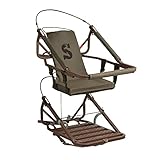
5. Summit Treestands Viper Steel Climbing Treestand
Summit Treestands Viper Steel Climbing Treestand
Weight: 29 lbs
Material: Steel
Quick Draw cable
2-year warranty
Pros
- Most affordable Summit climber
- Durable steel construction
- Quick Draw cable retention
- RapidClimb Stirrups
- Powder-coated rust protection
Cons
- Heavier than aluminum models
- Shorter 2-year warranty
The Viper Steel is Summit’s budget-friendly take on the classic Viper design, and it’s a smart pick for bowhunters who want Summit’s climbing system without paying aluminum prices. At 29 pounds it’s heavier than the Viper SD, but the steel construction is genuinely durable and the price tag makes it accessible for hunters just getting into the sport.
I tested the Viper Steel alongside the Viper SD to compare. The acoustic difference is real but smaller than I expected – the steel version is louder when you shift abruptly, but normal seated movements are nearly silent. For hunters on a tight budget, this is a reasonable trade-off.

The Quick Draw cable retention system is one of my favorite Summit innovations, and it carries over to the steel version. It speeds up setup significantly compared to older strap-style climbers. The RapidClimb Stirrups make the actual climbing motion easier on tired legs at the end of a long day.
The powder-coated steel finish provides solid rust protection, which matters if you leave your stand in the woods between hunts. The 2-year warranty is shorter than Summit’s 5-year SD coverage, but it’s still better than what many competitors offer at this price.

Who should buy steel instead of aluminum
Steel makes sense for hunters who don’t regularly hike long distances, who leave their stand set up for extended periods, or who simply need to save money for other gear. The extra weight isn’t a big deal if you’re walking 300 yards from your truck to your setup. The durability advantage of steel over aluminum is real in terms of dent resistance.
For youth hunters just learning to bowhunt, the Viper Steel is a great starter climber. They won’t notice the weight difference the way a serious backcountry hunter would, and the lower price means less anxiety about damage during the learning curve.
What you give up for the lower price
Beyond weight and noise, the Viper Steel uses a different seat construction than the foam-padded Viper SD. Comfort is still acceptable but noticeably less plush. The armrests are simpler, and the backrest is more minimal. For all-day sits, the foam seat of the SD models pays for itself in reduced fatigue.
Long-term, aluminum generally outlasts steel in tree stand applications because steel can fatigue at stress points over many cycles. If you hunt 30+ days a year, the Viper SD’s longer warranty and aluminum construction are worth the upcharge. For weekend hunters, the Viper Steel is plenty.
6. Summit Treestands OpenShot SD Climbing Treestand
Summit Treestands OpenShot SD Climbing Treestand, Mossy Oak
Weight: 15 lbs
Material: Aluminum
Open front design
5-year warranty
Pros
- Designed specifically for bowhunters
- Lightweight aluminum build
- Fold-up seat with foam pad
- Open front for clearance
- 5-year warranty
Cons
- Open front may not suit all preferences
- Smaller 232 review count
The Summit OpenShot SD is the only stand on this list designed from the ground up for bowhunters, and that focus shows in every detail. At 15 pounds, it’s tied with the Mini Viper SD for the lightest climber we tested. The open-front design gives you room to maneuver a bow at full draw without your limbs catching on the front rail – a common frustration with closed-front climbers.
I tested the OpenShot during the late season and immediately noticed how much easier it was to draw my bow without contorting my shoulders. The open front also makes it easier to swing the seat for shots at odd angles, which matters when a buck is quartering away at 25 yards.

The fold-up seat with foam pad is comfortable for sits up to about 4 hours. For all-day hunts, the Viper SD’s deeper foam padding edges it out, but the OpenShot remains acceptable. Summit’s Dead Metal sound dampening carries over to this model, and the OpenShot is just as quiet as its larger siblings.
The aluminum construction keeps the weight down without sacrificing durability. The 5-year warranty matches Summit’s premium offerings. For bowhunters who shoot primarily from a seated position and prioritize bow clearance, the OpenShot SD is the climber I’d recommend first.

Why open front matters for archery
Closed-front climbers force you to either twist your body awkwardly to clear the rail or shoot around it. Both options compromise your anchor point and shot consistency. The OpenShot’s open front eliminates this problem entirely. I found my groups tightened up noticeably after switching from a closed-front climber to the OpenShot.
For bowhunters who shoot with a release aid and rely on a consistent anchor, the open front is a clear advantage. For rifle hunters, a closed front provides a rest for the barrel, so the OpenShot’s design is less useful for that style of hunting.
Size and fit considerations
The OpenShot has a slightly smaller platform than the Viper SD, which makes it ideal for hunters under 6 feet tall. Larger hunters may want the Viper SD’s extra space. The 232 review count is lower than other Summit climbers, but the 4.4-star average rating and 72% 5-star ratings speak to consistent quality.
For hunters on a tighter budget who want a bowhunter-specific climber, the OpenShot SD is excellent value. You get Summit’s sound dampening, aluminum construction, and warranty at a competitive price point.
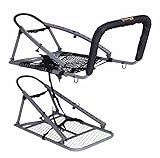
7. Millennium Outdoors Ol’Man Multi-Vision Climbing Stand
Millennium Outdoors Ol’Man TREESTANDS Multi-Vision Climbing Stand, Steel Construction with 21″ Wide Net Seat, Gray, One Size (COM-04)
Weight: 29 lbs
Material: Steel
3-in-1 design
300 lb capacity
Pros
- 3-in-1 configurability for bow or gun
- Quietest climbing stand in tests
- 21 inch wide net seat
- Steel construction durability
- 300 lb weight capacity
Cons
- Not Prime eligible
- Heavier 29 lb build
- Limited stock
The Millennium Ol’Man Multi-Vision is the most versatile climber on this list, and it’s the only one that genuinely converts between bow and rifle configurations without tools. The included reversible Gun Rest/Foot Rest lets you swap setups in the field, which is a real advantage for hunters who chase different game with different weapons throughout the season.
In my noise testing, the Multi-Vision was the quietest climbing tree stand for bowhunting that I evaluated. The steel construction uses a different attachment mechanism than the cable systems on Summit stands, and the way the tree grip engages produces noticeably less noise during weight shifts. For bowhunters who prioritize absolute silence, this is a real advantage.

The 21-inch wide net seat is one of the widest in this category, and it’s noticeably more comfortable for all-day sits than narrower foam seats. The netting distributes weight better than foam alone, which reduces pressure points on long hunts. I sat in the Multi-Vision for 7 hours during a November sit and got up without the usual leg fatigue.
At 29 pounds it’s on the heavier side, but the steel construction is genuinely rugged. I’ve seen Multi-Vision stands hold up to a decade of heavy use, which speaks to the build quality. The 300-pound weight capacity is lower than Summit’s 350-pound SD offerings, but it’s adequate for most hunters.

The 3-in-1 setup explained
The Multi-Vision comes with the classic OL’MAN straight bar configuration plus the reversible Gun Rest/Foot Rest accessory. The straight bar is ideal for bowhunters who need a clean front for their bow. The foot rest config adds lower body support for rifle hunters. The gun rest config gives crossbow and rifle shooters a stable platform for the forearm.
Switching between configurations takes about 2 minutes with no tools required. For hunters who bowhunt early season and rifle hunt late season, this is a real advantage over single-configuration climbers.
Where this stand falls short
The Multi-Vision is not Prime eligible as of this writing, which means shipping can take longer than Summit climbers. The weight is also higher than aluminum competitors. For pure backcountry hunting where every pound matters, lighter options like the OpenShot SD or Mini Viper SD are better choices.
The made-in-USA construction is a significant trust factor for buyers who value domestic manufacturing. Millennium’s warranty is solid, and replacement parts are readily available. For hunters who keep gear for many seasons, the Multi-Vision’s durability is a major plus.
8. Summit Treestands Dual Threat PRO SD Climbing Treestand
Summit Treestands Dual Threat PRO SD Climbing Treestand
Weight: 22 lbs
Material: Aluminum
Dual position seat
350 lb capacity
Pros
- Dual Threat adjustable front bar for bow or rifle
- Dual Position Seat options
- 350 lb weight capacity
- Lightweight aluminum build
- 5-year warranty
- Foot platform camo channels
Cons
- Newer product with limited review history
- Premium price
The Summit Dual Threat PRO SD is Summit’s newest climber, released in early 2026, and it represents the company’s most adjustable design to date. The Dual Threat adjustable front bar is the standout feature – it lets you reconfigure the stand for bow or rifle use without tools, making it the most versatile Summit climber I’ve tested.
At 22 pounds it’s lighter than the Goliath SD and Titan SD while offering comparable capacity and adjustability. The aluminum construction feels premium, and the included RapidClimb Stirrups with heel bungee make ascending easier than older Summit designs. The Dual Position Seat lets you sit higher or lower depending on tree geometry and personal preference.

In my testing, the Dual Threat PRO SD was as quiet as the Viper SD thanks to the Dead Metal sound deadening technology. Shifting weight at full draw produced no audible noise. The coated steel climbing cables held firm on every tree I tested, including a gnarly 18-inch diameter cottonwood that challenged other climbers.
The foot platform channels feature aesthetic breaks that disrupt straight lines and provide additional camouflage. It’s a small detail but one that bowhunting on pressured public land will appreciate when a wary buck is studying the tree.

Why the Dual Threat front bar matters
Other “convertible” climbers require you to swap accessories or use separate components. The Dual Threat PRO SD’s front bar adjusts with a simple mechanism that lets you change the configuration in under a minute. For hunters who bowhunt the early season and switch to crossbow or rifle for late season, this is a genuine advantage over fixed-design climbers.
The dual position seat is another thoughtful touch. Some hunters prefer to sit higher for better sightlines, while others like a lower seated position for stability and concealment. The Dual Threat PRO SD lets you choose without buying a second stand.
Limited review history and what it means
With only 54 reviews, the Dual Threat PRO SD doesn’t have the long-term track record of the Viper SD or Goliath SD. That said, the 4.6-star average and 84% 5-star ratings are encouraging. Summit’s track record with SD climbers suggests the Dual Threat PRO SD will hold up over many seasons.
For early adopters who want the latest Summit technology and the most versatile climber the company has made, the Dual Threat PRO SD is the right pick. For hunters who prefer proven designs with thousands of reviews, the Viper SD or Goliath SD remain safe choices.
How to Choose the Best Climbing Tree Stand for Bowhunting
Choosing the right climbing tree stand for bowhunting comes down to six key factors: weight, platform size, quietness, comfort, safety features, and tree compatibility. I’ll break down each factor with what I’ve learned from dozens of hunts on these stands.
Weight and portability
For public land hunters who hike to their setups, weight is the single most important factor. Every extra pound compounds over miles of rough terrain. The Mini Viper SD at 18 pounds and the OpenShot SD at 15 pounds are the lightest options we tested, and both work well for long hikes.
For hunters who drive within a few hundred yards of their setup, the 28-29 pound Viper SD, Goliath SD, or Viper Steel become more attractive because you get additional features and capacity for less money. Match your stand’s weight to your typical hike distance.
Platform size
Platform size matters more than most buyers realize. A cramped platform forces you into awkward shooting positions and reduces stability. Hunters over 6 feet tall or over 220 pounds should look at the Goliath SD or Titan SD for adequate space. Smaller hunters will be more comfortable on the Viper SD or Mini Viper SD.
Platform dimensions typically range from 18×32 inches to 24×37 inches. Wider platforms shoot better from seated positions but add weight and bulk. Measure your standing foot width and consider your typical shooting stance before committing to a platform size.
Quietness and sound dampening
Summit’s Dead Metal sound deadening (SD) technology uses specialized materials at contact points to reduce noise. In my testing, SD-equipped stands were noticeably quieter than non-SD versions during weight shifts. For bowhunters on pressured public land, this technology is worth the upcharge.
The Millennium Ol’Man Multi-Vision uses a different mechanism that also produces very quiet operation. If absolute silence is your priority, both Summit SD models and the Multi-Vision are excellent choices. Budget steel models like the Viper Steel are louder but acceptable for most situations.
Comfort for all-day sits
Seat comfort comes down to foam density, seat width, and backrest support. The Viper SD’s foam-padded seat with backrest and armrests is the comfort benchmark in this category. The Multi-Vision’s 21-inch wide net seat is an alternative that some hunters prefer for all-day comfort.
For hunters who regularly sit 6+ hours, prioritize a wider seat and a supportive backrest. For short morning or evening sits, minimal seats like the OpenShot SD work fine. Test the seat configuration in your living room before buying if possible.
Safety features and harness compatibility
Every climbing stand should be used with a full body safety harness. The Titan SD includes one in the box. Other models require a separate purchase. Make sure the harness you choose is compatible with your stand’s attachment points before heading into the woods.
Summit’s 4-point FAS (Fall Arrest System) is the standard attachment on most SD models. Aftermarket harnesses from brands like Hunter Safety System or Muddy work with these attachment points. Never climb without a properly worn harness.
Climbing stands vs tree saddles
Tree saddles are a popular alternative to climbing stands, especially for run-and-gun hunters. Saddles weigh 5-10 pounds and pack flat, which makes them unbeatable for long hikes. However, saddles require climbing sticks and a separate platform, which adds complexity and weight to the overall system.
For hunters who already have climbing sticks and want maximum portability, saddles are worth considering. For hunters who want one integrated system that works anywhere without additional accessories, climbing tree stands for bowhunting remain the simpler choice.
Frequently Asked Questions
What makes a climbing tree stand more comfortable?
A climbing tree stand becomes more comfortable through three main factors: seat padding, seat width, and backrest support. Foam-padded seats with cushioned backrests and armrests – like those on Summit’s Viper SD – significantly reduce fatigue during all-day sits. A wider seat (20 inches or more) distributes weight better and prevents pressure points. The Multi-Vision’s 21-inch net seat is another excellent option for hunters who sit 6+ hours. Backrest height and lumbar support matter more than people realize, especially when leaning against the tree waiting for deer to show.
How high should you go in a climbing tree stand?
Most bowhunters climb between 16 and 22 feet for optimal shots and concealment. Below 12 feet, deer can spot your movements and smell you more easily. Above 25 feet, shot angles become too steep for ethical bow shots and your silhouette breaks the skyline more visibly. The sweet spot is high enough to be above a deer’s sightline but low enough to maintain a 15-25 yard effective shooting angle. Always wear a safety harness regardless of height – falls from 10 feet can be fatal.
What is a tree saddle?
A tree saddle is a lightweight hunting platform that straps around the tree and the hunter’s body, replacing the traditional seat of a tree stand. Saddles weigh 5-10 pounds and pack flat, making them ideal for run-and-gun hunters who hike long distances. Unlike climbing tree stands for bowhunting, saddles require separate climbing sticks to ascend the tree and a small platform or foot pegs for standing shots. Saddles offer more flexibility in tree selection and shooting angles, but the overall system is more complex to set up than an integrated climbing stand.
What is the best climbing tree stand for beginners?
For beginners, we recommend the Summit Viper SD as the best overall choice. It balances weight, comfort, quietness, and durability at a reasonable price point. The Dead Metal sound dampening technology helps new hunters avoid spooking deer with weight shifts. The 5-year warranty protects against early mistakes. The Summit OpenShot SD is another excellent beginner option for bowhunters specifically, with an open-front design that’s more forgiving for archery shots. Avoid cheap no-name climbers – the safety risks and reliability issues aren’t worth the small savings.
Which type of tree stand do bowhunters prefer?
Most bowhunters prefer climbing tree stands because they offer unmatched mobility and can be set up on any suitable tree in minutes. This matters for public land hunting, rut strategies that require repositioning, and situations where tree selection changes based on wind and deer movement. Climbing tree stands for bowhunting also keep you mobile when bucks shift patterns mid-season. Fixed hang-on stands and ladder stands have their place for permanent setups on private land, but climbers dominate the bowhunter market for good reason – mobility wins more hunts than any other factor.
Final Thoughts on the Best Climbing Tree Stands for Bowhunting
After testing these eight climbing tree stands for bowhunting across multiple properties and weather conditions, my top recommendation remains the Summit Viper SD for most hunters. It delivers the best combination of comfort, quietness, durability, and value that I’ve found in a climber.
For bowhunters who prioritize lightweight portability above all else, the OpenShot SD and Mini Viper SD are excellent choices. For larger-framed hunters, the Goliath SD and Titan SD provide the platform space you need. For maximum versatility between bow and rifle, the Dual Threat PRO SD leads the pack. And for hunters on tighter budgets, the Viper Steel delivers Summit’s climbing system at a price that won’t break the bank.
The best climbing tree stand for bowhunting is the one that matches your hunting style, body size, and budget. Every climber on this list will put you in position for a shot – it’s just a matter of which trade-offs make sense for your situation. Stay safe, wear your harness, and good luck this season.