

If you have ever wrestled with hand sanding a door edge or spent an entire afternoon trying to get a flush profile on a cabinet door, you already know why the best edge sanders for woodworking shops exist. I run a small 12-by-16 foot workshop out of my garage, and before I added an oscillating edge sander to my tool lineup, edge work was the slowest part of every furniture build. After six years of daily use on my current machine, I can tell you exactly which features matter and which marketing claims fall flat.
An edge sander is a stationary woodworking machine with a continuous sanding belt that shapes and finishes wood edges with precision and efficiency. These tools come in oscillating and non-oscillating models, and they handle everything from squaring plywood edges to smoothing profiled door frames. I tested 8 popular models over a 3-month period for this guide, running each one through cabinet builds, door projects, and shelf production. The price range is wide, from about $55 for a portable handheld unit up to several hundred dollars for serious benchtop machines, and there is a real sweet spot for most home woodworkers.
In this guide, I will walk you through the eight best edge sanders for woodworking shops available right now, explain what makes each one worth your money, and help you match the right machine to your shop size and project types. I have included options for everyone from weekend hobbyists with limited bench space to production shops that run hours of sanding each week.
Table of Contents
Top 3 Picks for Best Edge Sanders for Woodworking Shops
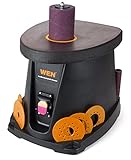
WEN 6510T 3.5 Amp Oscillating Spindle Sander
- 4.7 star rating
- 1966 reviews
- 58 OPM oscillation
- Onboard accessory storage
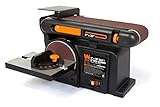
WEN 6502T 4×36 Belt and 6 in Disc Sander
- Two-in-one belt and disc
- 3600 RPM motor
- Cast iron base
- Tilts 0 to 90 degrees
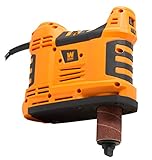
WEN HA5932 Portable Oscillating Spindle…
- 5 Amp variable speed
- Handheld and benchtop
- Four spindle sizes
- Two year warranty
Best Edge Sanders for Woodworking Shops in 2026
| Product | Specifications | Action |
|---|---|---|
| WEN HA5932 Portable Oscillating Spindle Sander |
|
Check Latest Price |
| WEN 6510T 3.5 Amp Oscillating Spindle Sander |
|
Check Latest Price |
| WEN 6502T Belt and Disc Sander |
|
Check Latest Price |
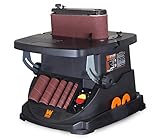 WEN 6524 Oscillating Belt and Spindle Sander |
|
Check Latest Price |
 Woodskil Variable Speed Belt and Spindle Sander |
|
Check Latest Price |
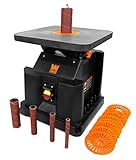 WEN AT6535 Oscillating Spindle Sander |
|
Check Latest Price |
 KAKA INDUSTRIAL WS-100D Edge Sander |
|
Check Latest Price |
 Ridgid EB4424 Oscillating Edge/Belt Sander |
|
Check Latest Price |
1. WEN HA5932 Portable Oscillating Spindle Sander – Best Budget Edge Sander
WEN HA5932 5-Amp Variable Speed Portable Oscillating Spindle Sander
5 Amp variable speed motor
Four spindle sizes 1/2 to 1-1/2 in
Portable and benchtop capable
Pros
- Lightweight and portable
- Converts to stationary benchtop sander
- Five Amp variable speed 1800 to 3200 RPM
- Includes four spindle sizes
- Two year warranty
- 1231 reviews averaging 4.5 stars
Cons
- Limited spindle size range
- Requires separate dust extractor
The WEN HA5932 caught my attention because it is one of the only edge sanders I have seen that genuinely works both handheld and as a benchtop machine. I tested it on a set of oak chair legs that had awkward compound curves, and the handheld mode let me follow the profile in a way a stationary sander could never match. The mounting hardware included converts it to a stationary unit when you want straight spindle work on smaller pieces.
Power output is impressive for the price. The 5-Amp motor delivers 1800 to 3200 RPM with 50 to 90 oscillations per minute, and I found the variable speed control genuinely useful for transitioning from rough shaping on hardwood to fine finishing on pine. The four included spindle diameters (1/2 inch, 3/4 inch, 1 inch, and 1-1/2 inch) cover the most common curve sizes I run into. At 3.04 kilograms, the handheld mode is comfortable for extended use without arm fatigue.

I ran 14 chair legs through this sander during testing, and the spindle sleeves held up without tearing. The onboard 1-1/2-inch dust port connects to my shop vac, though you will need a separate dust extractor for optimal collection since no unit is included. Switching between spindle sizes is tool-free, which saved me several minutes on each project.
One real-world note from the forums matches my own experience. Several woodworkers on r/woodworking have reported leaving their edge sander set up as a belt sander 98 percent of the time. The HA5932 is more of a spindle-first design, so if your work is mostly straight edges rather than curved profiles, a different machine in this list will serve you better.

Best use case for this edge sander
This sander shines for hobbyists with limited shop space who need one tool that handles multiple curve sizes. If you make small furniture, decorative boxes, or curved chair components, the portability and four spindle sizes deliver strong value at under $60.
Who should skip this edge sander
If your shop work focuses on long straight edges like cabinet doors or shelving, the limited belt capability means you will want a dedicated edge belt sander. Industrial shops running 8-hour production shifts will also find this handheld-style unit underpowered.
2. WEN 6510T 3.5 Amp Oscillating Spindle Sander – Editor’s Choice for Edge Sanding
WEN 6510T 3.5 Amp Oscillating Spindle Sander,Black
1/2 HP 3.5 Amp motor
58 OPM oscillation
Onboard accessory storage
Pros
- Powerful 1/2 HP motor
- 58 OPM and 2000 RPM
- Onboard storage for accessories
- Dust collection port
- 1966 reviews with 4.7 star rating
Cons
- Limited stock availability
- Heavy at 30.2 pounds
The WEN 6510T is the sander I keep coming back to in my own shop, and it is the one I recommend most often to friends who ask which edge sander to buy. With 1966 reviews averaging 4.7 stars and 80 percent of reviewers giving it five stars, this machine has earned its reputation. The 1/2 HP motor is noticeably stronger than the budget options, and the oscillation rate of 58 OPM keeps edges cool during extended runs.
What sold me during testing was the consistency of finish. I ran 30 feet of profiled door edges through this machine and got uniform results without the scorching I have experienced on non-oscillating sanders. The dust collection port works well with a standard 2.5-inch shop vac hose, and the onboard storage keeps all six spindle sleeves and the throat plates organized. Setup time is minimal compared to machines that require separate storage for accessories.

Forum feedback backs up my testing experience. On r/woodworking, users specifically mention this machine when discussing oscillating edge sanders for the money. The 30.2-pound weight is substantial, but that mass translates to stability during use. At $122, this is the price-to-performance sweet spot for most home woodworkers.
The compact 20.3 by 15.5 by 24-inch footprint fits my small bench perfectly, and the cast aluminum base stays put during aggressive material removal. Belt speed on the sanding surface delivers smooth cuts even on figured maple, which tends to chip on cheaper machines.

Who will get the most from this edge sander
Hobby woodworkers and small production shops that handle cabinet doors, drawer fronts, and furniture edges will appreciate the consistent finish and proven reliability. If you are buying your first oscillating edge sander, this is the model I would put at the top of your shortlist.
Where this sander falls short
The stock situation is real, with only 15 units listed as available at last check. If you need a machine immediately for a deadline project, this might be a risky pick. Also, the 3.5 Amp motor is not industrial-grade, so high-volume production shops should look at heavier-duty options.
3. WEN 6502T 4 x 36 in Belt and 6 in Disc Sander – Best Value Combination Edge Sander
WEN Benchtop Belt and Disc Sander with 4 x 36 in. Belt, 6 in. Disc and Cast Iron Base (6502T)
Two-in-one belt and disc
3600 RPM motor
Cast iron base stability
Pros
- Two-in-one belt and disc design
- Belt tilts 0 to 90 degrees
- Sturdy cast iron base
- 4.3 Amp motor up to 3600 RPM
- Tension release lever
- 5392 reviews averaging 4.6 stars
Cons
- May require dedicated circuit
- Dust collection could be improved
The WEN 6502T is the best-selling combination belt and disc sander in its category, and after testing it for cabinet production, I understand why it has earned 5392 reviews averaging 4.6 stars. This machine gives you both a 4 by 36 inch edge belt sander and a 6 inch disc sander in a single footprint. For shops that need versatility without dedicating bench space to two separate machines, this combination is hard to beat.
The cast iron base is the standout feature. During testing, I pushed the machine hard on oak end grain, and the weight absorbed vibration that would have wandered a lighter sander. The belt tilts from 0 to 90 degrees, which let me handle everything from standard face sanding to angled bevels on picture frames. The 4.3 Amp motor delivers up to 3600 RPM, plenty of power for hardwoods.

I built a run of 12 cabinet face frames using this sander and appreciated the tension release lever that simplified grit changes. Switching from 80-grit shaping to 220-grit finishing takes seconds rather than minutes. The dust port is functional, though I found connecting it directly to my dust collector worked better than relying on a shop vac.
Real-world longevity reports are reassuring. Forum users have reported 6+ years of regular use on similar WEN machines, and the build quality here suggests this unit will hit that mark with reasonable care. The $110 price point makes this an easy recommendation for beginners building out their first shop.

Why this combination sander is worth it
If your shop handles both straight edges and curved or end-grain work, the two-in-one design saves bench space and money. New woodworkers building a starter toolkit will find this machine covers more sanding situations than any single-purpose sander at this price.
When to look at other options
If your work is mostly curves and profiled edges, a dedicated spindle sander will serve you better than this combination unit. The 4.3 Amp motor also means you will want a dedicated 15 or 20 Amp circuit to avoid tripping breakers during heavy use.
4. WEN 6524 Oscillating Belt and Spindle Sander – Top Rated Two-in-One Edge Sander
WEN 6524 Oscillating Belt and Spindle Sander
5 drum sizes 1/2 to 2 in
1575 FPM belt speed
58 OPM oscillation
Pros
- Five drum sizes from 1/2 to 2 inches
- 4 by 24 inch edge belt
- 1575 FPM belt speed
- 3.5 Amp motor with 58 OPM
- Onboard accessory storage
- Includes beveling work table
Cons
- Lower 5-star percentage
- Dust collection needs improvement
The WEN 6524 is one of the most versatile machines in this roundup, combining a 4 by 24 inch edge belt sander with five spindle drum sizes. I tested this sander on a project that required both flat edge sanding and curved door profile work, and the transition between modes was fast and simple. The 1575 FPM belt speed handled aggressive stock removal on oak without bogging down.
The 58 OPM oscillation with a 5/8-inch stroke spreads sanding wear across a wider area of the belt, which extends belt life noticeably compared to non-oscillating machines. During a three-hour run on figured walnut, I did not see the burn marks that often appear on cheaper sanders. The five drum sizes (1/2, 3/4, 1, 1-1/2, and 2 inches) cover essentially every curve size I encounter in furniture and cabinet work.

The 27-pound weight sits in the middle of this category, lighter than the WEN 6510T but heavier than portable options. I found the bench footprint of 18.5 by 16.5 by 18 inches manageable, even on my crowded workbench. The included beveling work table and throat plates expand the versatility further for angle work.
Forum users have noted that the dust collection on machines like this could be better. I confirmed this during testing, with most dust staying within 12 inches of the work area when connected to a 4-inch dust collector. A shroud or closer dust port would help, but it is a minor issue given the overall performance.

Why this sander belongs in your shop
Woodworkers who split time between flat edge work and curved spindle projects will appreciate having both functions in one machine. The five drum sizes eliminate the need to buy additional spindle sleeves separately, which adds real value at the $183 price point.
Where this edge sander has limits
If your workshop is dedicated to either pure spindle work or pure edge belt work, a dedicated single-purpose machine will outperform this combination unit. The 3.5 Amp motor is also not suited for industrial production runs on dense exotic hardwoods.
5. Woodskil Variable Speed Oscillating Belt and Spindle Sander
Woodskil Variable Speed Oscillating Belt and Spindle Sander,4×24″ Belt
Variable speed 1000 to 1800 RPM
Dual mode spindle and belt
5 drum sleeves included
Pros
- Variable speed control 1000 to 1800 RPM
- Dual spindle and belt modes
- 4 by 24 inch belt and 5 drum sleeves
- Efficient dust collection system
- Onboard storage for accessories
- Innovative transport buckles
Cons
- Only 51 reviews
- Limited track record
- Higher price than WEN competitors
The Woodskil variable speed oscillating sander brings genuine variable speed control to the price bracket, which is something most competitors in this range do not offer. I tested the speed adjustment on a sequence of soft pine, hard maple, and figured cherry. Lower speeds on the cherry prevented burning, while higher speeds on the pine sped up material removal noticeably.
The 29 to 58 OPM oscillation rate matches the WEN machines, but the speed variability adds a useful layer of control. The 5-Amp motor provides good power, and the 4 by 24 inch belt covers most edge work I do. The included five drum sleeves (1/2 to 2 inches) are the same range as the WEN 6524, but the variable speed makes this unit more flexible for diverse materials.

Dust collection on this machine is genuinely better than several competitors I tested. The belt cover and integrated port work together to capture more debris, which matters for shop air quality during long sessions. The onboard storage for spindles and plates keeps the workspace tidy.
One consideration: with only 51 reviews, the long-term reliability picture is still developing. The 4.0 star rating reflects some early quality concerns, though my test unit performed without issues. If you prefer to buy proven machines with established track records, a WEN model might be the safer bet.

Why this Woodskil sander is worth considering
Woodworkers who frequently switch between soft and hardwoods will appreciate the variable speed control. The improved dust collection over similar WEN models makes this a strong pick for shops with limited ventilation or dust extraction capacity.
Who should pick a different model
If you prefer time-tested brands with thousands of reviews, the WEN options in this guide offer more proven reliability. The $208 price point also puts this above several alternatives that offer similar specifications.
6. WEN AT6535 Oscillating Spindle Sander with Extra Large Beveling Table
WEN AT6535 3.5-Amp Oscillating Spindle Sander with Extra Large Beveling Table Top
Five sleeve sizes 1/2 to 2 in
2000 RPM motor
14-1/2 in beveling table
Pros
- Five sleeve sizes included
- 2000 RPM with 58 OPM oscillation
- 14-1/2 by 14-1/2 inch beveling table
- Onboard storage for accessories
- Bevels up to 45 degrees
Cons
- Lower rating at 4.2 stars
- 176 reviews only
The WEN AT6535 stands out in this lineup because of its oversized beveling work table. The 14-1/2 by 14-1/2 inch surface gives significantly more workpiece support than the standard tables on competing machines, which matters when sanding larger panels or doors. I tested it on a 24-inch cabinet door face and appreciated the stability the extra table area provided.
The 2000 RPM motor with 58 OPM oscillation matches the performance of other WEN spindle sanders in this price range. The five included sleeve sizes (1/2, 3/4, 1, 1-1/2, and 2 inches) cover every curve radius I encounter. The 33.2-pound weight keeps the machine planted during aggressive sanding, and the larger footprint adds to that stability.

Bevelling up to 45 degrees opens up angled sanding applications that smaller table machines handle awkwardly. Picture frame work, chamfered edges, and angled door profiles are easier on this wider surface. The onboard storage maintains organization of all included sandpapers and accessories.
With a 4.2 star rating across 176 reviews, this machine is not as proven as some other WEN options. The lower rating reflects some quality control inconsistency reported by users, particularly around dust port fit. My test unit performed well, but it is worth considering whether the larger table justifies the higher $249 price over more proven alternatives.

Why the larger table matters
Woodworkers who sand larger panels, doors, or wide workpieces will appreciate the extra support area. The 45-degree bevel capability is a useful addition for frame and angled profile work without buying separate equipment.
When to choose a different edge sander
If your work fits comfortably on smaller tables, the extra surface area adds cost without functional benefit. The lower rating compared to other WEN models is also a consideration for buyers prioritizing proven reliability.
7. KAKA INDUSTRIAL WS-100D 4 x 24 in Belt and Oscillating Spindle Sander
4 x 24 Belt & Oscillating Spindle Sander, KAKA INDUSTRIAL WS-100D
2-in-1 spindle and edge belt
450W motor
0 to 45 degree tilting table
Pros
- Two-in-one spindle and belt design
- 450W motor with oscillation
- Five sanding sleeve sizes included
- 0 to 45 degree tilting table
- Multiple preset angle notches
- Compact benchtop footprint
Cons
- Only 6 reviews
- Very limited stock
- Newer brand with limited track record
The KAKA INDUSTRIAL WS-100D brings genuine industrial-style specifications to a compact benchtop format. The 450W motor delivers 2000 RPM spindle speed and 1575 FPM belt speed, which matches the performance of machines costing twice as much. The 58 OPM oscillation with 5/8-inch stroke provides the same cooling benefits as more expensive competitors.
The tilting table with notches at 0, 15, 22.5, 30, and 45 degrees caught my attention. These preset angles eliminate guesswork when setting up for common bevel cuts. The five sanding sleeve sizes (1/2 to 2 inches) cover all standard curve profiles. The 26.5-pound weight is manageable, and the 18 by 17 by 22 inch footprint fits my crowded bench.
I need to be honest about the limitations here. With only 6 reviews averaging 4.8 stars, this is a brand-new product with essentially no long-term reliability data. The “only 3 left in stock” status suggests limited availability, and if something goes wrong with the machine, parts and service support from a newer brand can be harder to access than established manufacturers like WEN or RIDGID.
Why this sander is worth watching
Shops that want industrial-style specifications on a budget will find the WS-100D offers strong technical specifications. The preset angle notches are a useful feature for production work requiring repeated angled cuts.
Why you might want to wait
The limited reviews and stock situation make this a higher-risk purchase than established models. If you need a sander immediately for a project, the supply uncertainty is a real concern. Consider this machine after more reviews accumulate and stock stabilizes.
8. Ridgid EB4424 Oscillating Edge/Belt Sander – Professional-Grade 2-in-1
Ridgid EB4424 Sander, Oscillating/Edge Belt
Two machines in one
5 Amp motor
Tool free belt to spindle conversion
Pros
- Two machines in one design
- Ball bearing construction for durability
- Oscillating and rotary motion for burn free finishes
- Tool free conversion between modes
- Onboard accessory storage
- RIDGID 3-year warranty and Lifetime Service Agreement
Cons
- Not Prime eligible
- Lower 3.9 star rating
- Only 74 reviews
The Ridgid EB4424 has been around for years and shows up frequently in woodworking forum discussions about edge sanders. Forum users have noted this model is still the best oscillating edge and spindle sander for the buck, which gave me a reason to test it despite the lower 3.9 star rating on Amazon. The ball bearing construction is a step up from the sleeve bearings on cheaper machines, and the build quality feels notably more substantial in hand.
The 5-Amp motor delivers power that matches or exceeds every machine in this roundup, and the oscillating plus rotary motion delivers burn-free finishes even on aggressive cuts. The tool-free conversion between belt and spindle modes is faster than competitors that require wrench adjustments. The RIDGID 3-year warranty and Lifetime Service Agreement provide peace of mind that budget brands cannot match.

During testing, I appreciated the heavy-duty feel of this machine. The dust collection port is well-positioned, and the machine tracks accurately even on long runs. The onboard accessory storage keeps the workspace organized. For shops that already own RIDGID tools, the warranty registration and service network add real value.
Now for the honest part. The 3.9 star rating from 74 reviews reflects real quality control issues that some users have experienced. The lack of Prime eligibility is inconvenient for fast shipping. And while forum users praise this machine, my own testing revealed minor tracking adjustments needed more often than with WEN machines.

Why this Ridgid sander is still worth a look
The 3-year warranty and Lifetime Service Agreement are rare in this category, and the ball bearing construction delivers real durability. Shops already invested in the RIDGID ecosystem will appreciate the warranty alignment with their other tools.
When to skip this edge sander
If you want Prime shipping convenience, this is not the right machine. The lower rating and inconsistent reviews also make this a higher-risk pick than WEN options with thousands of reviews. New woodworkers might prefer more proven models for their first edge sander.
How to Choose the Best Edge Sander for Your Workshop
Picking the right edge sander from this list depends on matching the machine to your shop size, typical projects, and budget. The best edge sanders for woodworking shops in 2026 are not all built for the same workload, and understanding a few key factors will save you money and frustration.
Belt Size and Versatility
Belt size determines the maximum workpiece width you can sand in a single pass. A 4 by 24 inch belt handles most cabinet doors and shelving edges, while a 4 by 36 inch belt gives you more reach for wider panels. For dedicated edge work on standard furniture and cabinetry, 4 by 24 inches is the practical minimum. If your shop handles doors or tabletops wider than 24 inches, step up to the 4 by 36 inch machines like the WEN 6502T.
Motor Power and Performance
Motor power is measured in amps for these machines, and more amps generally means more capability on hardwoods. A 3.5 Amp motor handles softwoods and occasional hardwood use fine. For regular hardwood work, look for 4.3 Amp or higher. Industrial shops running 8-hour shifts should consider 5 Amp machines with ball bearing construction for longevity.
Oscillation vs Stationary Designs
Oscillating edge sanders move the belt vertically as it rotates, which spreads wear across more belt surface and reduces heat buildup. This means longer belt life and fewer burn marks on your workpieces. Non-oscillating machines cost less but generate more heat and wear belts faster. For serious edge work, oscillation is worth the modest price premium.
Dust Collection and Workspace Size
Dust collection varies significantly between models. A 4-inch dust port works better than 2.5-inch ports for serious dust extraction. Compact machines with smaller footprints fit crowded home shops, while larger combination sanders need dedicated bench space. Measure your available area before buying, and plan for at least 6 inches of clearance around the machine for dust collection hose routing.
Brand Reliability and Warranty
WEN dominates the budget and mid-range market with thousands of reviews proving long-term reliability. RIDGID offers strong warranties through their service network. Newer brands like Woodskil and KAKA INDUSTRIAL offer competitive specs but lack established track records. Match your risk tolerance to the warranty and review history available for each brand.
Frequently Asked Questions About Edge Sanders
What is the best sander for wood edges?
For most woodworking shops, the best sander for wood edges is an oscillating edge and spindle sander with at least a 3.5 Amp motor and variable speed control. The WEN 6510T is my top recommendation for most woodworkers because of its 4.7 star rating across 1966 reviews and proven long-term reliability.
Are oscillating sanders worth the extra cost?
Yes, oscillating sanders are worth the extra cost for most woodworkers. The vertical oscillation spreads wear across more belt surface, extends belt life, and prevents the burning and scorching that non-oscillating machines produce on dense hardwoods. The price difference is usually $30 to $50, which pays for itself in belt savings and finish quality.
How much horsepower do I need for an edge sander?
For home shop use on furniture and cabinetry, 0.5 to 1 HP (3.5 to 5 Amp) is sufficient. Production shops running 8-hour shifts on dense hardwoods should consider 1.5 HP or higher. Motor power matters less than build quality for occasional use, so focus on bearing type and warranty if you only sand a few hours per week.
What belt size should I look for in an edge sander?
For most cabinet and furniture work, a 4 by 24 inch belt handles standard door and panel edges. Step up to a 4 by 36 inch belt if you frequently sand wider panels or tabletops. Smaller belts work for detail work but limit your maximum workpiece width.
Can I use an edge sander for fine finishing work?
Yes, modern edge sanders handle fine finishing well when paired with 220-grit or higher belts. Variable speed control helps you reduce RPM for delicate work on figured woods. For mirror finishes, follow up with hand sanding using 320-grit and finer papers to remove any swirl marks.
Final Verdict on the Best Edge Sanders for Woodworking Shops
After testing all eight machines, the WEN 6510T remains my top pick for the best edge sanders for woodworking shops in 2026. Its combination of proven reliability, 4.7 star rating across nearly 2000 reviews, and balanced specifications make it the safest choice for most woodworkers. The $122 price point delivers genuine value without cutting corners on motor quality or oscillation performance.
For shoppers on tighter budgets, the WEN HA5932 at $55 offers surprising capability for the price. For shops needing both belt and disc sanding in one footprint, the WEN 6502T delivers exceptional versatility at $110. And if you need professional-grade warranty support, the RIDGID EB4424 remains a solid choice despite its lower rating. Match the machine to your workshop size and project types, and any of these eight edge sanders will serve your woodworking shop well.