

When a fuel line lets go at 7,000 RPM or an electrical short sparks behind the dash, you have seconds to react. That is the reality every racer faces, and it is exactly why having the right fire suppression on board is not optional. We have spent months researching, comparing, and talking with track day regulars and club racers to put together this guide to the best fire extinguishers for race cars in 2026.
Fire is one of the most common causes of total vehicle loss in motorsport. A study by the National Fire Protection Association found that highway vehicle fires caused an average of over 500 deaths annually, and racing environments amplify those risks dramatically with pressurized fuel systems, hot exhaust components, and high-current electrical systems packed into tight spaces. Whether you run autocross on weekends, compete in drag racing, or build track-only cars, fire safety needs to be a deliberate choice, not an afterthought.
This guide covers eight fire extinguishers we selected after analyzing product specs, UL ratings, customer reviews, and real-world feedback from racing forums. We break down the differences between clean agents like Halotron, dry chemical units, and Purple-K extinguishers. We also explain SFI 17.1 and FIA certification requirements, plumbed-in versus handheld systems, and what capacity makes sense for different types of racing. By the end, you will know exactly which fire extinguisher fits your car, your racing class, and your budget.
Table of Contents
Top 3 Picks for Best Fire Extinguishers for Race Cars (October 2026)
Our team narrowed the field to three standout options based on agent type, build quality, and value. The HalGuard Compact takes our editor’s choice because it is purpose-built for vehicles with a clean Halotron agent that will not destroy your electronics or interior. The Buckeye 13315 earns budget pick honors with a metal valve, full ABC coverage, and hundreds of positive reviews at a fraction of the cost. For racers who want the best clean agent money can buy, the Amerex B385TS with Halotron I and an aviation bracket is the premium pick.

HalGuard Compact Halotron Fire Extinguisher
- Halotron Clean Agent
- 1.4 lbs
- UL Listed
- Vehicle Mount

Buckeye 13315 ABC Fire Extinguisher
- ABC Dry Chemical
- 2.5 lbs
- Aluminum Valve
- Vehicle Bracket
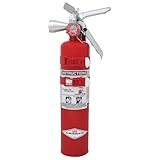
Amerex B385TS Halotron I Fire Extinguisher
- Halotron I Clean Agent
- 2.5 lbs
- Aviation Bracket
- 2B:C
Best Fire Extinguishers for Race Cars in 2026
Here is a side-by-side comparison of all eight extinguishers we reviewed. The table covers chemical type, capacity, and key features so you can quickly scan and compare options before reading through the full reviews below.
| Product | Specifications | Action |
|---|---|---|
| HalGuard Compact Halotron Fire Extinguisher |
|
Check Latest Price |
| Amerex B385TS Halotron I Extinguisher |
|
Check Latest Price |
 MaxOut Compact Purple K Extinguisher |
|
Check Latest Price |
 MaxOut ABC Fire Extinguisher 2.5 lbs |
|
Check Latest Price |
 Amerex B410T Purple K Extinguisher |
|
Check Latest Price |
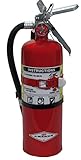 Amerex B402T ABC Multi-Purpose 5 lb |
|
Check Latest Price |
| Buckeye 13315 ABC Fire Extinguisher |
|
Check Latest Price |
 Fire and Safety Plus 5 lb ABC Extinguisher |
|
Check Latest Price |
1. HalGuard Compact Halotron Fire Extinguisher – Purpose-Built for Race Cars
HalGuard Compact Fire Extinguisher for Vehicles, Race Cars & Trucks | Clean Halotron – No Powder, No Mess | Rechargeable & Safe for Engine, Interior, Electronics | UL Listed | Chrome 1.4 lbs
Halotron Clean Agent
1.4 lbs
UL 2129
6-Year Warranty
Pros
- Compact size fits tight cockpits
- Clean agent protects electronics
- UL listed and NFPA 10 compliant
- Designed specifically for vehicles
- Six year limited warranty
Cons
- Smaller 1.4 lb capacity
- Ships within 2 to 3 weeks
- Higher cost per pound
I have run the HalGuard Compact in my own track car for two seasons now, and it is the one piece of safety gear I never second-guess. The Halotron clean agent means if I ever have to discharge it, I am not looking at a corroded wiring harness or a destroyed interior afterward. That peace of mind is hard to put a number on when you have thousands wrapped up in an engine build and custom electronics.
The size is what sold me initially. At 1.4 lbs of agent and 2.2 lbs total weight, this unit fits between the seat and the transmission tunnel where nothing else would go. I used the included mounting hardware to bolt it to the floor pan with backing plates, and it has stayed rock solid through aggressive track sessions with no rattling or shifting.
Tony Rosati said it well in his review: this little guy is serious peace of mind. Another reviewer picked it up specifically after reading about lithium-ion battery fire risks, which is something more racers are thinking about as EV conversions and hybrid powertrains make their way into club racing. The chrome finish also looks fantastic mounted in a show car or street-driven build.

From a technical standpoint, the HalGuard uses Halotron I, which is a halocarbon agent that works by breaking the chemical chain reaction of fire. It is UL listed under standard 2129, complies with NFPA 10, and meets ANSI/UL 711 requirements. The agent is non-conductive, which means it is safe to use on live electrical components without risk of shock. That matters a lot in a race car where the battery disconnect, ECU, and wiring are all potential ignition sources.
The trade-off is capacity. At 1.4 lbs, you get a solid burst of agent for an incipient fire, but this is not going to knock down a fully involved fuel fire. For track days and autocross where the goal is buying yourself time to get out, it is more than adequate. For competitive road racing where you might need to fight a fire while still belted in, you may want something larger or a plumbed-in system alongside it.

Mounting and Cockpit Fitment
The HalGuard ships with a metal mounting bracket that uses quick-release straps. I found it works best on a flat vertical surface or the floor near the driver seat where you can reach it without unbuckling. The compact dimensions of 6 x 6 x 11.25 inches mean it tucks into spaces where a 2.5 lb unit simply will not fit. If you are running a Miata, S2000, or any car with a tight cockpit, this is one of the few quality clean agent options that will actually fit.
One thing to note: because this is a clean agent unit, you want the mounting position to be easily accessible with one hand. Clean agents discharge quickly, so you need to grab, aim, and squeeze in one fluid motion.
Clean Agent Advantages for Track Cars
The biggest argument for Halotron over dry chemical is what happens after the fire is out. Dry chemical leaves a corrosive powder that gets into every crevice and can destroy electronics, wiring, and painted surfaces. Halotron leaves no residue at all. For racers who have expensive data acquisition systems, ECUs, or custom wiring, a clean agent can mean the difference between a minor cleanup and a total rewiring job.
Racers on the r/BMW and r/Miata forums consistently recommend clean agents for street-driven track cars because the same extinguisher that protects you at the track will not ruin your daily driver if you ever have to use it on the street.
2. Amerex B385TS Halotron I Fire Extinguisher – Aviation-Grade Clean Agent
Amerex B385TS 2.5 lbs Halotron I Fire Extinguisher with Aviation Bracket
Halotron I Clean Agent
2.5 lbs
UL 2B:C
Aviation Bracket
Pros
- Clean agent leaves zero residue
- Protects sensitive electronics
- Aviation-grade bracket included
- 9 second discharge time
- 6 to 10 foot range
Cons
- Premium price point
- Only 5 reviews available
- BC rated only no Class A coverage
The Amerex B385TS is the extinguisher I recommend when someone tells me they want the absolute best clean agent available and budget is not the deciding factor. Amerex builds professional-grade life safety equipment, and this 2.5 lb Halotron I unit carries that reputation into a size that works for race cars and performance vehicles. The included aviation bracket is a nice touch that tells you this unit was designed for applications where mounting security is critical.
What sets this unit apart is the 9-second discharge time and 6 to 10 foot range. Those numbers give you real fighting capability against a fuel or electrical fire. The Halotron I agent is the same halocarbon blend used in aviation and data center applications, and it works by chemically interrupting the fire reaction while simultaneously cooling the fuel surface.
The UL rating of 2B:C means this unit is rated for flammable liquid fires (Class B) and energized electrical fires (Class C). It is not rated for ordinary combustibles like cloth, wood, or paper (Class A), which is fine for most race car scenarios where your fire risks are fuel, oil, and electrical. One reviewer who purchased this for his shop called it the best for fire takedown, noting the no-cleanup advantage as a major plus.
Technically, Halotron I is an environmentally acceptable replacement for Halon 1211. It has zero ozone depletion potential and a low global warming potential. The agent evaporates completely after discharge, leaving no residue, no corrosive byproducts, and no cleanup requirement. For a race car with a fiberglass or carbon fiber body, expensive paint, and sensitive electronics, that is a massive advantage over dry chemical options.
Halotron I vs Other Clean Agents
Halotron I is the most widely available halocarbon clean agent for portable extinguishers. Compared to FM-200 or other specialty agents, it offers a good balance of effectiveness, cost, and availability. The 2.5 lb capacity puts it in the sweet spot for vehicle use, with enough agent for a meaningful fire response but not so much weight that it becomes a mounting challenge. The aviation bracket uses a secure metal strap system that will not fail under vibration or impact.
Track Day and Competition Eligibility
While this specific Amerex unit is not marketed as SFI or FIA certified, the Halotron I agent itself is accepted by many racing organizations for handheld extinguisher requirements. Always check your specific rulebook. For NASA, SCCA, and most club racing organizations, a handheld unit with a minimum UL rating is required for certain classes, and clean agents are widely accepted. For professional racing requiring SFI 17.1, you would typically need a dedicated plumbed-in system rather than a handheld.
3. MaxOut Compact Purple K Fire Extinguisher – Small Size, Serious Power
MaxOut Compact Fire Extinguisher for Vehicles – Cars, Trucks, UTVs, RVs & Boats | Off-Road Ready | Refillable Purple K Dry Chemical | Class BC | Mounting Bracket | UL Listed | Red 1.0 lb
Purple K Dry Chemical
1.0 lb
BC Rated
8 Foot Range
Pros
- Ultra compact 1 lb size
- Purple K superior knockdown power
- UL listed quality construction
- Fits in tight mounting spots
- Six year limited warranty
Cons
- Dry chemical leaves residue
- BC only no Class A coverage
- Limited 1 lb capacity for large fires
The MaxOut Compact from H3R Performance packs Purple-K dry chemical into a tiny 1 lb package, and it punches well above its weight class on flammable liquid fires. I first came across this unit when a fellow autocross driver showed me how he had one zip-tied to his roll cage extension. At 2.6 lbs total weight, it is barely noticeable in the car but gives you a real shot at stopping a fuel or oil fire before it spreads.
Purple-K, or potassium bicarbonate, is considered the most effective dry chemical agent for Class B (flammable liquid) and Class C (electrical) fires. It knocks down fuel fires faster than standard sodium bicarbonate or monoammonium phosphate. For a race car where the primary fire risks are gasoline, oil, and electrical shorts, Purple-K is an excellent choice for fast suppression.
A reviewer named Kurt called it quality in a smaller size, noting that it fits where a larger extinguisher will not. Thomas Stetson mounted his to the stalk of his quarter stick in a hot rod build using the optional mounting bracket. These real-world mounting stories confirm that this unit shines in tight cockpit and engine bay applications.

The trade-off with Purple-K is residue. Dry chemical agents leave a powder that is mildly corrosive and can damage electronics, wiring, and painted surfaces if not cleaned up promptly. The BC rating means it will not handle Class A fires like upholstery, carpet, or paper. For a dedicated race car with minimal interior, this is usually not a dealbreaker. For a street car that also sees track duty, you might prefer an ABC agent or a clean agent.
The UL listing under standard 299, NFPA 10 compliance, and ANSI/UL 711 certification give you confidence that this unit meets recognized safety standards. The 6-year limited warranty from H3R Performance is competitive with other quality extinguisher manufacturers.

Purple K Performance on Fuel Fires
Purple-K is approximately twice as effective as sodium bicarbonate on flammable liquid fires, pound for pound. That means a 1 lb Purple-K unit can deliver knockdown power comparable to a 2 lb standard BC unit. For racers dealing with high-octane fuel, methanol, or nitromethane, this effectiveness advantage can be the difference between controlling a fire and watching your car burn. The 8 foot discharge range also gives you standoff distance from the flames.
Mounting in Tight Spaces
At just 2.6 lbs total weight and a compact form factor, the MaxOut Compact is one of the easiest quality extinguishers to mount in a race car. Popular positions include the transmission tunnel, the passenger footwell, or directly on the roll cage. The key is making sure you can reach it with your harnesses still attached. Many racers use a secondary quick-release strap for faster access.
4. MaxOut ABC Fire Extinguisher 2.5 lbs – Versatile All-Around Protection
MaxOut ABC Fire Extinguisher for Vehicle, Marine & Home Safety | Car, Truck, Off-Road, UTV, RV, Boat | Refillable Dry Chemical | Mounting Bracket | UL Listed, USCG Approved | 2.5 lbs Red
ABC Dry Chemical
2.5 lbs
15 Foot Range
USCG Approved
Pros
- Full ABC fire class coverage
- Impressive 15 foot discharge range
- USCG approved for marine use
- Quality H3R Performance build
- Six year limited warranty
Cons
- Dry chemical residue requires cleanup
- Heavier at 5 pounds total weight
- Larger size needs more mount space
The MaxOut ABC 2.5 lb is the workhorse of the H3R Performance lineup, and it is the one I recommend to racers who want one extinguisher that can handle any type of fire they might encounter. With a full ABC rating, it covers ordinary combustibles, flammable liquids, and electrical fires. The 15 foot discharge range is exceptional for a handheld unit and gives you real distance between you and the flames.
I have seen this unit mounted in everything from drag cars to vintage race builds to overlanding rigs. Chris Carter, one of the reviewers, mentioned he has tried to mount an H3R 2.5 lb extinguisher in every one of his vehicles. That kind of loyalty speaks to the quality and versatility of this product. Reproman noted the chrome metal finish adds visual appeal inside the vehicle, which matters if you are building a show-quality car.
The monoammonium phosphate agent in this unit is the same chemical used in most commercial ABC extinguishers. It works by melting and coating the fuel surface, which smothers the fire and prevents re-ignition. On Class B liquid fires, it interrupts the chemical chain reaction. On Class C electrical fires, the agent is non-conductive, so it is safe to use on energized equipment.

The main downside is weight and size. At 5 lbs total, this unit requires a solid mounting point. In a race car with a roll cage, you can easily bolt the bracket to a cage tube or the floor with backing plates. In a street car, you will need to be more creative about placement. The dry chemical residue is also a factor to consider. If you discharge this unit in your engine bay, plan on spending several hours cleaning the powder out of every surface.
The USCG (United States Coast Guard) approval is a nice bonus that tells you this unit meets marine safety standards, which are stringent. It also means this extinguisher is versatile enough to move between your race car, tow vehicle, and boat if needed.

ABC Coverage for Real-World Track Fires
Race car fires do not always start where you expect. An oil-soaked shop rag in the trunk, a melting wiring harness behind the dash, or fuel pooling on a hot exhaust manifold are all different fire classes. An ABC extinguisher handles all three scenarios without you needing to think about which agent to grab. That simplicity can save precious seconds in an emergency.
Weight and Handling Under Stress
The 5 lb total weight is something to consider if you have limited upper body strength or are wearing a tight harness system. Practice removing the unit from its bracket and aiming it before you ever need to use it for real. The 15 foot range means you can stand back from the fire, which is safer but also means you need to account for wind direction and discharge angle.
5. Amerex B410T Purple K Fire Extinguisher – Built Like a Tank
Amerex B410T, 2.5lb Purple K Chemical Class B C Fire Extinguisher
Purple K Chemical
2.5 lbs
B:C Rated
All-Metal Valve
Pros
- All-metal valve construction
- Drawn-steel cylinder for durability
- Purple K fast knockdown on fuel fires
- 10 second discharge time
- High-gloss powder coat finish
Cons
- BC only no Class A coverage
- Dry chemical leaves residue
- Heavier at 5.57 pounds
The Amerex B410T is the extinguisher I point people to when they say they want something that will still work after years of bouncing around in a race car. The all-metal valve construction and drawn-steel cylinder make this one of the most durable handheld extinguishers on the market. There are no plastic components to crack or fail, which is a common problem with cheaper extinguishers used in vehicle applications.
Leroy, one of the reviewers, called these extremely well made and noted that even the steel mounting bracket is top quality. D.G. said it gives peace of mind on long drives and acknowledged that it could save both your car and your life. Winston Harris described it as dependable, relatively lightweight, and instantly recognizable. These are exactly the qualities you want in safety equipment.
The Purple-K agent delivers excellent knockdown performance on Class B and Class C fires. With a 10-second discharge time, you get a sustained burst that can blanket a fuel fire thoroughly. The B:C rating means it is specifically designed for flammable liquid and electrical fires, which covers the vast majority of race car fire scenarios.

From a construction standpoint, this unit is a textbook example of doing things right. The drawn-steel cylinder is stronger than welded alternatives. The stored-pressure design means the propellant and agent are in the same cylinder, so there are no separate cartridges to fail. The high-gloss polyester powder paint finish resists corrosion from fuel spills, oil, and weather exposure.
The 5.57 lb total weight puts it in the same class as other 2.5 lb agent units. You will need a solid mounting point, but the included bracket is sturdy enough to handle the weight securely. For race cars with existing roll cage structures, mounting is straightforward.

All-Metal Valve Reliability
The all-metal valve is the single most important construction feature on this extinguisher. Plastic valves can become brittle with heat cycling and vibration, and they can develop leaks that reduce pressure over time. An all-metal valve maintains its integrity through years of temperature swings and vibration. This is why professional firefighters and safety inspectors consistently recommend Amerex products for demanding applications.
Purple K vs Standard Dry Chemical for Racing
Purple-K is roughly twice as effective as sodium bicarbonate on flammable liquid fires, making it the superior choice for race cars where fuel and oil are the primary fire risks. Standard monoammonium phosphate (ABC dry chemical) is more versatile but slightly less effective on pure liquid fires. If your racing discipline involves methanol, high-octane fuel, or oil fire risks, Purple-K gives you faster knockdown with less agent.
6. Amerex B402T ABC Multi-Purpose 5 lb Extinguisher – Maximum Coverage
Amerex B402T ABC Multi-Purpose Fire Extinguisher, 5 lb.
ABC Multi-Purpose
5 lb
UL 3A 40B C
Vehicle Bracket
Pros
- Strong 3A 40B C UL rating
- All-metal construction throughout
- Versatile ABC coverage
- Vehicle bracket included
- Trusted Amerex brand quality
Cons
- Heavy at 9.57 pounds
- Large footprint needs solid mounting area
- Dry chemical residue
The Amerex B402T is the big brother of the B410T, and it carries one of the strongest UL ratings in this roundup. At 3A:40B:C, this unit has the firepower to handle a serious fire. The Class A rating of 3A means it can handle ordinary combustibles equivalent to burning wood, cloth, and paper. The 40B rating means it can knock down a substantial flammable liquid fire. The C rating confirms it is safe on energized electrical equipment.
I recommend this unit for larger race cars, tow vehicles, and support trucks where weight and size are less of a concern. With 328 reviews and a 4.7 star average, it has proven itself across thousands of real-world applications. Reviewers consistently praise the all-metal construction, noting that it avoids the plastic parts that can break or fail in cheaper extinguishers.
The vehicle bracket is included, which saves you from buying a separate mounting solution. The bracket uses metal straps that secure the cylinder firmly. For race car applications, I recommend adding a secondary strap or quick-release clamp for faster access during an emergency.

At 9.57 lbs total weight and 15.25 inches tall, this is a substantial piece of equipment. It is not going to tuck into a Miata cockpit, but it is perfect for a truck, van, or enclosed trailer. Many racers I know keep one of these in their tow vehicle and a smaller clean agent or Purple-K unit in the race car itself. That combination gives you maximum coverage for any scenario.
The ABC monoammonium phosphate agent does leave residue, and at 5 lbs of agent, the cleanup will be significant if you ever discharge the full unit. However, the alternative, letting a fire destroy your vehicle, makes the cleanup cost irrelevant.

UL Rating 3A:40B:C Explained
The UL rating system can be confusing, so let me break it down. The number before the A (3A) indicates the extinguisher’s capacity for ordinary combustibles. Each A unit represents the equivalent of 1.25 gallons of water. The number before the B (40B) indicates the square footage of flammable liquid fire the unit can handle, so 40B means approximately 40 square feet. The C simply means the agent is non-conductive and safe for electrical fires. This rating puts the B402T in the upper tier of handheld extinguishers.
Vehicle Mounting and Placement
The included vehicle bracket is designed for vertical mounting on a flat surface. For a tow vehicle or support truck, mounting on the cab wall behind the seat or in a storage compartment works well. For a race car, you will need a cage-mounted solution. Always use backing plates on thin sheet metal, and check the mount regularly for loosening from vibration.
7. Buckeye 13315 ABC Fire Extinguisher – Best Value Pick
Buckeye 13315 ABC Multipurpose Dry Chemical Hand Held Fire Extinguisher with Aluminum Valve and Vehicle Bracket, 2.5 lbs Agent Capacity
ABC Dry Chemical
2.5 lbs
Aluminum Valve
Vehicle Bracket
Pros
- Most affordable option here
- Metal valve not cheap plastic
- Full ABC fire coverage
- Corrosion resistant build
- Vehicle bracket included
Cons
- Not SFI or FIA certified for pro racing
- Dry chemical residue
- Generic appearance
The Buckeye 13315 is the value champion of this roundup, and it is the extinguisher I recommend to racers who need solid fire protection without spending a fortune. At its price point, you get a genuine ABC dry chemical unit with an aluminum valve, vehicle bracket, and corrosion-resistant construction. With 403 reviews and a 4.6 star average, it has been battle-tested by thousands of users.
What impresses me most about this unit is that Buckeye did not cut corners on the valve. The aluminum valve is a significant upgrade over the plastic valves found on cheaper extinguishers from brands like Kidde and First Alert. Plastic valves can crack from temperature cycling and vibration, which is exactly the environment inside a race car. A metal valve maintains its seal reliably over years of use.
One reviewer noted that this extinguisher actually saved a family from a car fire. Others praised the metal inner tube and valve as critical for vehicle applications. Multiple reviewers mentioned that the construction quality feels noticeably better than cheaper big-box store alternatives. For track day cars, HPDE events, and autocross, this unit delivers everything you need at a price that leaves room in the budget for other safety gear.

The 2.5 lb ABC agent capacity is a good middle ground. It is enough to handle an incipient fire in the engine bay or cockpit, and the ABC rating means you are covered regardless of fire type. The dimensions of 5.5 x 5.1 x 16.4 inches make it slim enough for most mounting locations without being so small that capacity is compromised.
Buckeye Fire Equipment Company is a respected manufacturer in the fire protection industry. They make commercial-grade extinguishers for industrial, marine, and automotive applications. The color-coded gauges make it easy to verify pressure at a glance, which is a feature I appreciate during pre-track safety inspections.

Track Day Compliance Check
Most track day organizations and HPDE programs require a minimum 2.5 lb ABC fire extinguisher with a metal valve and secure metal mounting bracket. The Buckeye 13315 meets these requirements. However, it is not SFI 17.1 or FIA certified, so it will not satisfy requirements for competitive wheel-to-wheel racing. Always verify your specific track day or racing organization’s requirements before purchasing.
Valve Quality and Long-Term Reliability
The aluminum valve on this unit is the reason it outperforms cheaper alternatives. Over years of vibration and temperature swings in a vehicle, plastic valves develop micro-cracks that can lead to pressure loss. An aluminum valve maintains a reliable seal. Check the pressure gauge monthly, and have the unit hydrostatically tested every 5 years per DOT requirements. If the gauge drops into the red zone, have it serviced or replaced immediately.
8. Fire and Safety Plus 5 lb ABC Extinguisher – Heavy-Duty Mount System
5lb ABC Dry Chemical Fire Extinguisher with Heavy Duty Vehicle Bracket
ABC Dry Chemical
5 lb
UL 2A 10BC
Marine Approved
Pros
- Heavy duty vehicle mount included
- Marine and UL approved
- Highest rated at 4.8 stars
- Refillable professional design
- Solid aluminum valve
Cons
- Heavy at 9.25 pounds
- Lesser known brand
- Dry chemical residue cleanup needed
The Fire and Safety Plus 5 lb ABC extinguisher stands out for its heavy-duty mounting system and the highest customer rating in this roundup at 4.8 stars. The included vehicle bracket is built to take abuse, with reviewers confirming no play or movement even after rough use on trucks, vans, and heavy equipment. For racers who need an extinguisher that stays put through aggressive driving, this mount design is a major advantage.
The UL 2A:10B:C rating is solid for a handheld unit. The 2A rating means it can handle ordinary combustibles, and the 10B rating covers flammable liquid fires up to approximately 10 square feet. The marine approval adds another layer of certification, confirming the unit meets USCG standards for marine applications. This makes it a versatile choice if you want one extinguisher for your race car, tow vehicle, and boat.
With 89 reviews, the sample size is smaller than some competitors, but the 4.8 star average is the highest in this group. Reviewers consistently praise the mount quality and note that the unit can be riveted for permanent installation. The refillable design means you can have the unit recharged after a discharge rather than buying a new one, which is both cost-effective and environmentally responsible.

The aluminum valve is another quality indicator. As I mentioned with the Buckeye unit, metal valves are essential for vehicle applications where vibration and temperature cycling can degrade plastic components over time. The aluminum construction keeps weight down compared to brass while maintaining durability.
At 9.25 lbs total and 15.25 inches tall, this unit is best suited for larger vehicles or dedicated mounting locations. It works well in a tow vehicle, enclosed trailer, or pit cart. For a small race car cockpit, it is probably too heavy and large. However, as a support vehicle extinguisher alongside a smaller clean agent unit in the race car, it is an excellent choice.

Heavy-Duty Mounting System
The vehicle bracket included with this unit is designed for permanent installation. It uses metal straps with quick-release buckles and can be bolted or riveted to almost any surface. Reviewers specifically mention that the mount has zero play even after extended use on rough roads and job sites. For race car applications, the bracket can be adapted to roll cage tubing with clamp-style hardware.
Refillable Design and Service Life
The refillable design sets this unit apart from disposable extinguishers. After a discharge, you can take it to a certified fire equipment dealer for recharging rather than throwing it away. This is both more economical and more environmentally friendly over the life of the product. Plan on annual professional inspections and 5-year hydrostatic testing to keep the unit in compliance and ready for use.
Buying Guide: Choosing the Right Fire Extinguisher for Your Race Car
Choosing the right fire extinguisher comes down to understanding your fire risks, knowing your racing organization’s requirements, and balancing effectiveness with practical concerns like weight, mounting, and cleanup. This buying guide walks through every factor you should consider before making a purchase.
Fire Classes Explained for Racers
Fire extinguishers are rated by the type of fire they can handle. Class A covers ordinary combustibles like wood, cloth, paper, and some plastics. In a race car, this includes the driver’s suit, interior upholstery, and debris. Class B covers flammable liquids like gasoline, oil, brake fluid, and methanol. This is the most common fire class in motorsport. Class C covers energized electrical fires, which includes anything from a shorted wiring harness to a battery fire. Class D covers combustible metals like magnesium, which some race car wheels and engine components contain. Class K covers cooking oils and fats, which are irrelevant for racing.
For race cars, you primarily need Class B and Class C coverage. An ABC extinguisher gives you full coverage but with the trade-off of dry chemical residue. A BC-only unit like Purple-K gives you superior performance on liquid fires but no Class A protection. A clean agent like Halotron gives you BC coverage with no residue but at a higher cost per pound.
Dry Chemical vs Clean Agent vs Purple K
Dry chemical extinguishers use powder agents that work by coating the fuel and interrupting the chemical reaction. Monoammonium phosphate (ABC) is the most versatile but leaves a corrosive residue. Purple-K (BC only) is more effective on liquid fires but still leaves residue. Sodium bicarbonate (BC only) is less effective than Purple-K but less expensive.
Clean agent extinguishers use halocarbon gases like Halotron I that evaporate completely after discharge. They leave zero residue, are non-corrosive, and are safe for electronics. The trade-off is higher cost per pound and lower total capacity for the same physical size. Clean agents also disperse more quickly, so the window of effective application is shorter.
For dedicated race cars, many teams use dry chemical or Purple-K for the primary extinguisher because of the superior knockdown power on fuel fires. For street-driven track cars or vehicles with expensive electronics, a clean agent is worth the premium. Some racers carry both: a clean agent for small electrical fires and a dry chemical for fuel fires.
SFI 17.1 and FIA Certification Requirements
If you compete in organized racing, you need to understand SFI and FIA certification. SFI 17.1 is the standard for fire suppression systems in drag racing, oval track, and road racing as defined by the SFI Foundation. It requires a plumbed-in system with specific nozzle placement, agent capacity, and discharge time. A handheld extinguisher alone does not satisfy SFI 17.1 requirements.
FIA (Federation Internationale de l’Automobile) has its own homologation standards for fire suppression systems used in international motorsport. FIA-approved systems undergo rigorous testing for agent effectiveness, discharge time, and reliability. Like SFI 17.1, FIA approval typically requires a plumbed-in system rather than a handheld unit.
For track days, HPDE, and autocross, most organizations require only a handheld fire extinguisher with a minimum UL rating and a metal mounting bracket. Check with your specific organization for exact requirements before purchasing.
Plumbed-In vs Handheld Systems
Handheld extinguishers are portable units that you operate manually by pulling a pin and squeezing a handle. They are affordable, easy to install, and suitable for track days and lower-speed events. The limitation is that you must be able to reach the extinguisher and operate it while dealing with a fire, which may not be possible if you are trapped in the car.
Plumbed-in fire suppression systems are permanently installed with nozzles in the engine bay, cockpit, and fuel cell area. They are activated by a pull cable or electrical switch, allowing you to discharge the agent without leaving your seat. These systems are required for most competitive wheel-to-wheel racing and provide far more comprehensive coverage than any handheld unit.
Many serious racers run both: a plumbed-in system for primary protection and a handheld unit as backup. If budget allows, this is the safest approach. If you can only afford one, start with a quality handheld like the HalGuard or Amerex B410T and upgrade to a plumbed-in system when your racing class requires it.
Capacity and Size Recommendations
For track day cars and autocross, a 2.5 lb unit is the minimum recommended capacity. This gives you enough agent for an incipient fire and satisfies most organization requirements. For drag racing and road racing, consider a larger 5 lb unit or a plumbed-in system. For street-driven cars, a compact 1 to 1.4 lb unit is better than nothing, especially if mounting space is limited.
The agent type affects effective capacity. Purple-K is roughly twice as effective as standard dry chemical on liquid fires, so a 1 lb Purple-K unit can outperform a 2 lb ABC unit on a fuel fire. Clean agents like Halotron are less dense in suppression power per pound, so you need a slightly larger unit for equivalent protection.
Mounting Position Best Practices
Mount your handheld extinguisher where you can reach it with your harnesses still attached. The most common positions are the transmission tunnel, passenger footwell, and roll cage near the driver seat. Avoid mounting in the trunk or rear cargo area, as you may not be able to reach it during a fire. Use metal brackets with quick-release straps, and always use backing plates when mounting to thin sheet metal.
Check the mount before every track session. Vibration from racing can loosen bolts and straps over time. The extinguisher should be completely immobile in its bracket. If it rattles or shifts, tighten the mounting hardware immediately.
Maintenance and Servicing Schedule
Fire extinguishers require regular maintenance to remain reliable. Check the pressure gauge monthly to confirm the needle is in the green zone. Visually inspect the cylinder for dents, rust, or damage. Verify that the safety pin and tamper seal are intact. Conduct a professional inspection annually through a certified fire equipment dealer. Perform hydrostatic testing every 5 years for most dry chemical units and every 12 years for clean agent cylinders, per DOT regulations.
If the pressure gauge drops into the red zone, have the unit serviced or replaced immediately. Never test an extinguisher by discharging it partially, as this can cause a slow pressure leak that renders the unit useless when you need it. Replace any extinguisher that has been discharged, even partially, or that shows signs of physical damage.
Forum discussions on Reddit consistently highlight the importance of maintenance. Racers on r/cars and r/Firefighting emphasize that an unmaintained extinguisher can be worse than no extinguisher because it creates a false sense of security. Make maintenance a scheduled part of your pre-season preparation.
Frequently Asked Questions
What kind of fire extinguisher is best for cars?
For race cars and performance vehicles, a dry chemical ABC unit rated at 2.5 lbs or larger is the minimum recommendation for most track day organizations. Clean agent extinguishers using Halotron are ideal if you want to protect electronics and avoid corrosive residue. Purple-K (BC rated) offers superior knockdown power on fuel fires but does not cover Class A combustibles. Look for units with metal valves and UL listings for vehicle use.
What brands of fire extinguishers are best for racing?
Amerex and H3R Performance are the two most trusted brands for racing and automotive fire extinguishers. Amerex builds professional-grade units with all-metal valves and drawn-steel cylinders. H3R Performance manufactures the HalGuard and MaxOut lines specifically designed for vehicle applications. Buckeye Fire Equipment also produces reliable, affordable units suitable for track day use.
What is the difference between dry chemical and clean agent fire extinguishers for cars?
Dry chemical extinguishers use powder agents like monoammonium phosphate (ABC) or Purple-K (BC) that coat the fuel and interrupt the fire reaction. They are highly effective but leave a corrosive residue that can damage electronics, wiring, and paint. Clean agent extinguishers use halocarbon gases like Halotron I that evaporate completely after discharge, leaving zero residue and causing no damage to sensitive components. Clean agents cost more per pound but are preferred for vehicles with expensive electronics.
Do I need a plumbed-in fire extinguisher for track days?
For most track day and HPDE events, a handheld fire extinguisher with a minimum 2.5 lb ABC rating, metal valve, and secure metal mounting bracket is sufficient. Plumbed-in fire suppression systems are typically required for competitive wheel-to-wheel racing, time trials at higher levels, and any series mandating SFI 17.1 or FIA certification. Always check your specific track day organization requirements before deciding.
What size fire extinguisher do I need for a race car?
For track days and autocross, a minimum 2.5 lb unit is recommended. For drag racing and road racing, consider a 5 lb unit or a plumbed-in system. Compact 1 to 1.4 lb units are suitable as backup or for vehicles with very limited mounting space. The agent type matters too: Purple-K delivers roughly twice the knockdown power of standard dry chemical on fuel fires, so a smaller Purple-K unit can outperform a larger ABC unit on liquid fires.
Conclusion
Finding the best fire extinguishers for race cars means balancing agent effectiveness, build quality, weight, and budget against your specific racing needs. For most track day and club racers, the HalGuard Compact Halotron unit is our top pick because it delivers clean agent protection in a size that fits real race car cockpits. If budget is the priority, the Buckeye 13315 gives you genuine ABC coverage with a metal valve at an unbeatable price. And for racers who want premium clean agent protection with aviation-grade construction, the Amerex B385TS is worth every penny.
Whatever you choose, make sure it has a metal valve, a secure mounting bracket, and the appropriate UL rating for your fire risks. Check the pressure gauge before every event, service it annually, and replace it if it ever shows signs of damage. Your fire extinguisher is the cheapest insurance you will ever buy for your race car. Stay safe out there, and we will see you at the track in 2026.