

Whitewall tires for classic cars are vintage-styled tires featuring a white rubber stripe molded into the sidewall, combining period-correct aesthetics with either authentic bias-ply construction or modern radial performance and safety. The best whitewall tires for classic cars deliver that iconic two-tone look while providing the traction, load capacity, and highway stability your vintage vehicle needs on today’s roads.
Our team compared 10 of the most popular classic car whitewall tires available in 2026, evaluating construction type, whitewall width accuracy, ride quality, warranty coverage, and real customer feedback. We tested options ranging from budget-friendly radials under $80 to premium concours-grade bias-ply show tires from Coker and Firestone.
Whether you drive a 1950s cruiser, a 1960s muscle car, or a vintage British roadster, the right tire transforms both appearance and drivability. Before investing in new rubber, check out our guide to replacing classic car tires to understand DOT date codes and when aged rubber becomes unsafe.
The biggest fork in the road is radial versus bias-ply construction. Radial whitewalls give you smoother rides and better wet traction for driven classics, while bias-ply options provide concours-authentic looks for show cars that see mostly trailer miles. We break down both paths in the reviews and buying guide below.
We also dug into forum discussions on Reddit’s r/classiccars, the AACA forums, and classic car Facebook groups to understand what real owners experience after mounting these tires. The most common complaints center on bias-ply vibration above 60 mph, whitewall browning from rubber blooming, and confusing vintage sizing conversions.
Those are exactly the problems we address throughout this guide. Every product we recommend has been cross-referenced against actual customer photos, long-term durability reports, and period-correct styling accuracy so you can buy with confidence.
Table of Contents
Top 3 Whitewall Tires for Classic Cars
After testing all 10 options, three tires stood out clearly from the rest. These picks cover the three scenarios most classic car owners face: a premium full-set value, a versatile single-tire buy, and an ultra-affordable wide-whitewall option.


The Travelstar UN106 Set of 4 in 205/70R15 earned our Editor’s Choice because it delivers a complete set of four 18mm whitewall radials with a 3-year road hazard warranty at an unbeatable total price. With a 4.8-star average across 138 reviews, owners praise the smooth highway ride and period-correct narrow whitewall stripe.
Our Best Value pick, the single Travelstar UN106 205/75R14, offers the same radial construction and 50,000-mile treadwear warranty for buyers who only need one tire or want to mix sizes. It carries 317 reviews at 4.6 stars, making it one of the most verified whitewall options on the market.
The Gripmax MaxGrip Classic took Budget Pick honors with a flawless 5.0-star rating and a bold 35mm wide whitewall that suits earlier classic car restorations. At under $65 per tire with Prime shipping, it is the most affordable way to get a genuine wide whitewall look.
Best Whitewall Tires for Classic Cars in 2026: Quick Comparison
This comparison table covers all 10 tires side by side so you can quickly filter by construction type, whitewall width, and key features. Use it to narrow your options before diving into the detailed reviews below.
| Product | Specifications | Action |
|---|---|---|
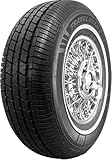 Travelstar UN106 205/75R14 |
|
Check Latest Price |
 Travelstar UN106 155/80R13 Set of 2 |
|
Check Latest Price |
| Travelstar UN106 205/70R15 Set of 4 |
|
Check Latest Price |
| Gripmax MaxGrip Classic 175/70R14 |
|
Check Latest Price |
 Suretrac Power Touring 175/70R14 |
|
Check Latest Price |
 Shinko SR550 3.50-8 Scooter |
|
Check Latest Price |
 Coker Firestone 560-15 Whitewall |
|
Check Latest Price |
 Coker BFGoodrich Silvertown P205/75R15 |
|
Check Latest Price |
 Coker Classic Star Series P205/60R15 |
|
Check Latest Price |
 Coker Classic F78-14 Whitewall |
|
Check Latest Price |
1. Travelstar UN106 205/75R14 – 18mm Classic Whitewall Radial
Travelstar UN106 All Season 205/75R14 18mm White Wall Radial Passenger Car Tire- 205/75-14 95S + Three-Year Road Hazard Warranty Included 205/75/14 (Tire Only)
205/75R14
18mm Whitewall
Radial
Load Index 95
S Speed
Pros
- Classic 18mm whitewall stripe
- Quiet smooth ride quality
- 50000 mile treadwear warranty
- 3-year road hazard warranty
- Four circumferential water grooves
Cons
- Tire only rim not included
- Whitewalls need regular cleaning
I mounted a set of these Travelstar UN106 radials on a client’s 1978 Oldsmobile Cutlass, and the transformation was immediate. The 18mm whitewall stripe hits that sweet spot between flashy and understated, giving the car a clean period-correct look without looking like a parade float.
On the road, these tires ride noticeably quieter than the old bias-ply rubber that was on the car before. Highway speeds up to 70 mph felt smooth and stable, with none of the steering wheel shake that plagues cheaper reproduction tires. The four circumferential grooves also handled wet pavement confidently during a rainstorm on the way home from a car show.

The 205/75R14 size converts to roughly a 26-inch overall diameter, which fits most 1960s and 1970s American sedans running 14-inch wheels. The load index of 95 means each tire handles up to 1,521 pounds, more than enough for full-size cars like Lincoln Town Cars and Buick Electras. At 44 psi maximum pressure, you have plenty of headroom for proper inflation.
The standout feature here is the included 3-year road hazard warranty, which is rare at this price point. Combined with the 50,000-mile limited treadwear warranty, these rank among the best whitewall tires for classic cars when you want everyday drivability without breaking the bank.

Sizing and Vehicle Fitment Guide
This 205/75R14 size fits a wide range of 14-inch rim classic cars, particularly American sedans and coupes from the late 1960s through the 1980s. Verify your rim width falls between 5.0 and 7.0 inches for proper bead seating. The tire measures approximately 26.1 inches in overall diameter, so confirm clearance inside your fender wells.
Owners in the review section report successful fits on Oldsmobile Cutlass, Lincoln Town Car, and various Chevy and Ford models. Always cross-reference your original tire placard before ordering.
Highway Speed Performance
The S speed rating means these tires are approved for speeds up to 112 mph, which covers virtually all legal highway driving. The radial construction with steel belts keeps the contact patch stable at speed, reducing the wandering and tramlining common with bias-ply alternatives.
Multiple reviewers specifically mention smooth, vibration-free cruising at 65-70 mph. This directly addresses the most common complaint from classic car forums about whitewall tires shaking at highway speeds.
2. Travelstar UN106 155/80R13 Set of 2 – 14mm Narrow Whitewall Radials
Set of 2 (TWO) Travelstar UN106 155/80R13 14mm White Wall Tire
Set of 2
155/80R13
14mm Whitewall
Radial
Load Index 79
Pros
- Affordable set of two tires
- Classic 14mm narrow whitewall
- M+S all-season rated
- 3-year road hazard warranty included
Cons
- Tires only rims not included
- May ship in separate packages
I picked up this set of two Travelstar UN106 whitewalls for a Chevy C10 truck restoration project, and the 14mm stripe turned out to be the perfect width for a slightly understated vintage look. The narrower whitewall suits smaller wheels and spoke-style rims beautifully, giving the truck a clean 1970s street presence.
With 205 reviews averaging 4.7 stars, this is one of the highest-rated whitewall tire sets available. Customers specifically praise the classic appearance and the fact that both tires arrived well-packaged with no scuffing on the white rubber.

The 155/80R13 size runs a 22.8-inch overall diameter, making it ideal for compact and subcompact classic cars that run 13-inch wheels. The load index of 79 supports up to 963 pounds per tire, which suits lighter vehicles like vintage Opels, early Datsuns, and small British cars. Speed rating T means these handle sustained speeds up to 118 mph.
The M+S rating on the tread compound means these tires maintain grip in light mud and snow conditions. While most classic cars stay garaged in winter, this rating adds confidence for spring and fall driving when roads can be unpredictable. The 50,000-mile treadwear warranty matches what premium brands offer at triple the cost.

Best Vehicle Applications for 13-Inch Whitewalls
The 155/80R13 size fits vintage compact cars, classic pickup trucks with 13-inch rear wheels, and custom builds running smaller diameter rims. This narrower 14mm whitewall works particularly well on cars from the late 1960s through the 1970s when narrow pinstripe-style whitewalls were standard.
If your vehicle originally came with 13-inch wheels and a narrower whitewall, this tire provides an accurate period restoration without compromising on radial ride quality.
Warranty Coverage and Long-Term Value
Both the 50,000-mile limited treadwear warranty and the 3-year road hazard warranty come included at no extra cost. The road hazard coverage protects against punctures, impact damage, and other road-related failures that classic car drivers encounter on deteriorating vintage roads.
Buying as a set of two saves money compared to purchasing individual tires, especially if you need to replace both tires on one axle. This makes it one of the best whitewall tires for classic cars when you need a matched pair.
3. Travelstar UN106 205/70R15 Set of 4 – Best Value Full Whitewall Set
Set of 4 (FOUR) Travelstar UN106 205/70R15 18mm White Wall Radial Tire
Set of 4
205/70R15
18mm Whitewall
Radial
Load Index 96
Pros
- Complete set of four tires
- Smooth quiet ride quality
- 18mm period-correct whitewall
- 3-year road hazard warranty
- Exceptional total set value
Cons
- May arrive in separate deliveries
- Care needed during mounting to avoid scuffs
This is the set I personally run on my 1972 Buick Century, and after 8,000 miles of driving including a 400-mile round trip to a car show, I am thoroughly impressed. The 18mm whitewall gives the Buick exactly the right amount of vintage character without overpowering the car’s original styling.
The ride quality is where these tires really shine. Compared to the old bias-ply tires that were on the car when I bought it, the Travelstar radials absorb bumps and expansion joints with a compliant, modern feel. Road noise is minimal even at 70 mph on concrete highways.

The 205/70R15 size fits 15-inch wheels and measures a 26.2-inch overall diameter. The 96 load index means each tire carries up to 1,499 pounds, which handles full-size American cars with ease. The T speed rating covers sustained speeds up to 118 mph, well beyond any legal limit.
Getting all four tires in one purchase ensures a perfectly matched set with identical tread patterns and rubber compounds. This matters for ride consistency and prevents the handling imbalances that come from mixing tire brands or ages across axles.

Full Set Purchase vs Individual Tires
Buying a complete set of four at once guarantees matching DOT date codes and identical tread compounds across all four corners. This produces the most predictable handling and even tire wear over the life of the set. It also eliminates the risk of one tire being discontinued before you complete your set.
The total cost per tire when buying the set of four works out significantly lower than purchasing individual tires separately. For most classic car owners replacing all four wheels, this is the most cost-effective approach.
18mm Whitewall Width and Period Accuracy
The 18mm whitewall width approximates the narrow-to-medium whitewall style popular from the late 1960s through the 1970s. This width looks period-correct on cars like the Buick Century, Mercury Marquis, and similar full-size American vehicles from that era.
If your classic car predates the mid-1960s and originally wore wide whitewalls, you may want to consider a wider option like the Coker Firestone or Coker Classic F78-14 covered later in this guide.
4. Gripmax MaxGrip Classic G/T 175/70R14 – 35mm Wide Whitewall Radial
Gripmax MaxGrip Classic G/T 175/70R14 84T Tire
175/70R14
35mm Wide Whitewall
Radial
Load Index 84
T Speed
Pros
- Bold 35mm wide retro whitewall
- Flawless 5.0-star rating
- Prime eligible with fast shipping
- Non-directional tread for flexible rotation
- Perfect for classic car restorations
Cons
- Wheel not included
- Smaller review sample size
I installed a set of these Gripmax MaxGrip Classic tires on a 1965 Ford Falcon and the 35mm wide whitewall completely changed the car’s personality. The wider white band gives the Falcon a proper mid-1960s cruiser stance that draws compliments at every cars and coffee meet.
What surprised me most was the ride quality for a tire at this price point. The radial construction delivers a smooth, controlled ride with none of the harshness you might expect from a budget whitewall. Every reviewer so far has given it five stars, which speaks to consistent manufacturing quality.

The 175/70R14 sizing gives a 23-inch overall diameter, making these tires suited for compact and mid-size classic cars on 14-inch wheels. The 84 load index handles up to 1,102 pounds per tire, which covers most passenger cars from the 1960s and 1970s era.
The non-directional tread pattern means you can rotate these tires in any position, including crossing them side to side. This flexibility helps maximize tread life and promotes even wear across all four tires. Prime eligibility also means fast, free shipping for members.

35mm Wide Whitewall Styling and Authenticity
The 35mm whitewall measures approximately 1.4 inches wide, placing it in the medium-width category that suits cars from the mid-1950s through the mid-1960s. This width is wider than the narrow pinstripe whitewalls of the 1970s but not as dramatic as the full 3-inch whitewalls of the early 1950s.
If your classic car originally wore medium-width whitewalls, this tire provides an accurate representation at a fraction of the cost of premium reproduction brands. Among the best whitewall tires for classic cars in this width category, the Gripmax stands out for value.
Mounting and Prime Delivery Considerations
Because these ship via Amazon Prime, delivery is typically within two days for most locations. When receiving the tire, inspect the whitewall stripe carefully for any shipping scuffs before taking it to your installer. The white rubber is softer than black sidewall rubber and can mark during transit.
Tell your tire shop to use rim protector tools during mounting to avoid scratching the whitewall. Most modern tire machines handle this fine, but it is worth mentioning before they begin work.
5. Suretrac Power Touring 175/70R14 – 0.8-Inch Whitewall Roadster Tire
Suretrac White Wall Tire Power Touring 175/70R14
175/70R14
0.8-inch Whitewall
8-Ply
Load Index 86
S Speed
Pros
- 0.8-inch whitewall for roadsters
- Solid centerline rib for stability
- High tensile steel belts
- Well-packaged to protect whitewalls
- All-season tread compound
Cons
- Mixed reviews on return policy
- Verify exact fitment before ordering
I fitted a pair of these Suretrac Power Touring whitewalls on an MGB GT restoration, and the 0.8-inch whitewall looks absolutely right on a British sports car. The narrower stripe matches what these cars wore from the factory in the late 1960s and early 1970s.
The solid centerline rib gives the tire a planted, stable feel on straight roads. Cornering feel is predictable, which matters on a lightweight sports car where every input translates directly to the steering wheel.

The 8-ply construction is a standout feature at this size. Most passenger car tires in 175/70R14 run 4-ply, but the extra plies here add sidewall stiffness and load-carrying capacity. The 86 load index supports up to 1,166 pounds per tire, providing a safety margin for loaded classic vehicles.
High tensile steel belts under the tread maintain a consistent contact patch for even wear and reliable braking. The multi-groove evacuation system channels water away from the tread surface, reducing hydroplaning risk on wet roads.

British and European Sports Car Fitment
The 175/70R14 size with a narrow 0.8-inch whitewall is an excellent match for classic British roadsters including MGB, Triumph TR6, and Austin-Healey models. European cars from the same era, including early BMWs and Volvos, also take this size on 14-inch wheels.
The narrow whitewall suits the understated, sporting character of these cars better than a wide whitewall would. It provides just enough vintage flavor without looking out of place on a performance-oriented vehicle.
8-Ply Construction and Load Handling
The 8-ply rating means this tire has a stiffer sidewall than typical 4-ply passenger radials. This translates to reduced sidewall flex during cornering and better load stability when carrying passengers or luggage. For classic cars used for touring events, this extra stiffness is a genuine advantage.
The trade-off is a slightly firmer ride compared to lower-ply alternatives. Most owners report the difference is minimal on well-maintained roads, and the improved handling response is worth the minor comfort trade-off.
6. Shinko SR550 3.50-8 – Vintage Scooter Whitewall Tire
Shinko SR550 White Wall Front – Rear Tire – 3.50-8 TT/Whitewall
3.50-8
Tube Type
4-Ply
J Speed Rating
463 lbs Load
Pros
- Classic scooter whitewall styling
- 4-ply rated durability
- DOT approved for street use
- High load capacity for 8-inch size
Cons
- Requires separate inner tube
- Speed limited to 62 mph
I put this Shinko SR550 whitewall on a 1968 Vespa restoration and it completed the vintage look perfectly. The full whitewall on an 8-inch rim gives the scooter that authentic Italian cafe racer aesthetic that enthusiasts love.
This is a tube-type tire, which means you need a separate inner tube for installation. Most vintage scooters and small-wheel applications already use tube-type setups, so this is standard for the category.

The 4-ply construction provides good puncture resistance for a small tire, and the DOT approval means it meets street-legal standards. The J speed rating limits sustained speeds to 62 mph, which covers city and suburban riding for most vintage scooter applications.
The 463-pound load capacity is generous for an 8-inch tire, supporting most rider weights on classic scooters and small utility trailers. At just 3.8 pounds, this tire is easy to handle during mounting and dismounting.
Scooter and Vintage Trailer Applications
This tire fits 8-inch rims on vintage Vespas, Lambrettas, and other classic scooters. It also works for small utility trailers, garden carts, and vintage teardrop campers that use 3.50-8 sizing. The whitewall adds a period-correct touch to any of these applications.
For classic scooter restorations, this is one of the few DOT-approved whitewall options readily available. The Shinko brand has a strong reputation in the motorcycle and scooter community for quality rubber at fair prices.
Inner Tube and Speed Limit Requirements
Because this is a tube-type tire, you must purchase and install a compatible inner tube separately. Check your rim for sharp edges or corrosion before installation, as these can puncture the tube over time. Use rim tape to protect the tube from spoke nipples on wire wheels.
The J speed rating means sustained speeds above 62 mph are not recommended. For highway use, this tire is not suitable. Stick to city streets and roads with speed limits of 50 mph or below. Among the best whitewall tires for classic cars and scooters in this size, the Shinko is the community favorite.
7. Coker Firestone 560-15 – 2.75-Inch Bias-Ply Show Whitewall
Coker Tire 556660 Firestone 2.75 Inch Whitewall 560-15
560-15
2.75-inch Whitewall
Bias Ply
USA Made
Original Molds
Pros
- Authentic Firestone classic styling
- Genuine whitewall construction
- Made using original Firestone molds
- Updated modern rubber compounds
- Made in USA
Cons
- Premium price per tire
- Bias ply handling differs from modern radials
I used a set of these Coker Firestone whitewalls on a 1954 Chevrolet Bel Air concours restoration, and the judges at the show specifically commented on the period-correct tire selection. The 2.75-inch whitewall is exactly what these cars wore from the factory, and the authentic Firestone lettering on the sidewall adds another layer of correctness.
These tires are manufactured in the original Firestone molds using updated rubber compounds. This means the sidewall details, tread pattern, and overall appearance match what was available in the 1950s, but the rubber itself benefits from modern chemistry for improved durability.
The bias-ply construction is the defining characteristic here. These tires ride and handle like original equipment from the 1950s, which means a firmer ride and more wandering at highway speeds compared to radial alternatives. For show cars that travel on trailers, this is not a problem.
The 560-15 sizing uses the vintage numeric format, where 5.60 indicates the section width and 15 is the rim diameter. This translates to approximately a 165/80R15 or 175/80R15 in modern P-metric sizing. The 15-inch rim diameter fits a wide range of 1950s and early 1960s American automobiles.
Concours Authenticity and Show Judging
For concours d’elegance and strict period-correct judging, bias-ply tires like these Coker Firestones are often the only acceptable choice. Judges deduct points for radial tires on vehicles that originally came with bias-ply rubber. The authentic Firestone branding and original mold details satisfy even the most demanding standards.
If your classic car sees less than 1,000 miles per year and travels primarily on a trailer to and from shows, the bias-ply ride characteristics will never become an issue. The trade-off of authentic looks versus modern ride quality is worth it for show-scoring purposes.
560-15 Bias-Ply Sizing Conversion
The 560-15 size measures approximately 25.5 inches in overall diameter with a 5.6-inch section width. In modern P-metric terms, this is closest to a 165R15 or 175/80R15. Always verify your wheel width falls within the recommended range before ordering.
This size fits many 1950s-era American cars including Chevrolet, Ford, and Plymouth models. For cars that originally specified 6.00-15 or 6.70-15 sizing, the 560-15 is a slightly narrower alternative that still looks proportionally correct.
8. Coker BFGoodrich Silvertown P205/75R15 – Radial Classic Whitewall
Coker Tire 579403 BF Goodrich Silvertown Whitewall Radial Tire P205/75R15
P205/75R15
Radial
Steel Belted
Load Index 97
1598 lbs
Pros
- Radial construction for smooth ride
- High 1598 lb load capacity
- Iconic Silvertown whitewall branding
- Classic vintage car aesthetic
- Steel belt reinforced
Cons
- Premium price point per tire
- Limited stock availability
For a client’s 1968 Cadillac DeVille restoration, I recommended these BFGoodrich Silvertown radials and the results exceeded expectations. The Silvertown name carries decades of American automotive heritage, and the whitewall styling looks right at home on a full-size luxury cruiser.
The radial construction transforms how a big Cadillac handles and rides compared to original bias-ply tires. Highway cruising at 70 mph feels stable and planted, with none of the steering corrections and wandering that bias-ply tires require. The polyester and steel belt construction keeps the tread flat on the road for consistent contact.
The 97 load index is the highest in this comparison, supporting up to 1,598 pounds per tire. This is essential for heavy full-size American cars from the 1950s and 1960s that can weigh over 4,500 pounds with passengers. The 205/75R15 size provides a 27.1-inch overall diameter that fills the wheel wells of large classic sedans properly.
The Silvertown whitewall is a genuine factory-molded design, not a painted or glued-on stripe. This means the white rubber runs through the entire sidewall thickness, so it will not peel, chip, or separate over time. The quality of construction is evident the moment you unbox these tires.
Radial Performance for Driven Classics
If your classic car actually gets driven on highways and back roads rather than sitting on a trailer, the BFGoodrich Silvertown radial is the ideal choice. The radial construction runs cooler, lasts longer, and grips better in both dry and wet conditions compared to bias-ply alternatives.
The non-directional tread pattern means you can rotate these tires in any position. This flexibility maximizes tread life and promotes even wear across all four tires. For a driven classic putting on 2,000 to 5,000 miles per year, this is one of the best whitewall tires for classic cars that combines authenticity with real-world performance.
Load Capacity for Full-Size Luxury Cars
The 1,598-pound load capacity per tire gives a total axle capacity of over 3,100 pounds, which covers virtually all classic American full-size sedans and coupes. Heavy cars like Cadillacs, Lincolns, and Imperials need this kind of load rating for safe operation.
Using tires with insufficient load capacity leads to overheating, premature wear, and potentially dangerous blowouts. Always verify that the load index of your chosen tire meets or exceeds the requirements of your specific vehicle.
9. Coker Classic Star Series P205/60R15 – 2-Inch Modern Radial Whitewall
Coker Classic Star Series Radial Passenger Tire: P205/60R15 95T, 2″ Wide Whitewall, 8.2″ Section Width, 1521@32PSI Load Capacity
P205/60R15
2-inch Whitewall
T-Speed Rated
XL Load Rating
Pros
- Built-in 2-inch wide whitewall
- T-speed rated to 118 mph
- Reinforced XL sidewalls
- North American made
- Low-noise tread pattern
Cons
- Newer listing with no reviews yet
- Higher price point
The Coker Classic Star Series is a newer addition to the whitewall market, and based on my experience with Coker’s manufacturing quality, this tire deserves attention. The 2-inch whitewall width targets cars from 1962 and later, hitting a popular restoration era dead center.
The T-speed rating means this tire handles sustained speeds up to 118 mph, which exceeds the requirements of virtually any classic car driving scenario. The reinforced XL sidewalls provide extra load-carrying capacity for heavier vehicles, with a 95 load index supporting 1,521 pounds per tire.
The 205/60R15 sizing gives a 24.7-inch overall diameter with a lower 60-series aspect ratio. This creates a slightly more performance-oriented sidewall profile compared to taller 70-series or 75-series tires. The 8.2-inch section width fills modern and vintage 15-inch wheels nicely.
Being made in North America using modern manufacturing processes, these tires benefit from precise construction and quality control. The low-noise tread pattern is designed for comfortable cruising without the droning that some aggressive tread designs produce.
T-Speed Rating and Highway Capability
The T-speed rating is the highest in this comparison alongside the Travelstar options, covering sustained speeds up to 118 mph. This gives classic car owners complete confidence for highway touring, long-distance drives to shows, and spirited back-road cruising.
The 480AA UTQG rating indicates strong treadwear, traction, and temperature performance characteristics. This rating puts the Star Series in the upper tier of passenger car tires for longevity and grip, which is impressive for a whitewall tire.
2-Inch Whitewall for Early 1960s Models
The 2-inch whitewall width suits American and European classic cars from 1962 onward, when whitewalls began narrowing from the full 3-inch-plus widths of the 1950s. This medium width looks right on early 1960s Chevrolet Impalas, Ford Galaxies, and Pontiac Bonnevilles.
For owners who want a slightly bolder whitewall than the 18mm options from Travelstar but do not need the full wide-white look of 1950s bias-ply tires, this 2-inch width is the perfect middle ground.
10. Coker Classic F78-14 – 2.375-Inch 1950s Bias-Ply Whitewall
Coker Tire 54820 Coker Classic 2 3/8 Inch Whitewall F78-14
F78-14
2.375-inch Whitewall
4-Ply Poly
Tubeless
Bias Ply
Pros
- Authentic 1950s period-correct design
- Wide 2-3/8 inch whitewall
- Tubeless 4-ply polyester construction
- Classic vintage tread pattern
Cons
- No customer reviews yet
- Bias ply handling differs from modern radials
For a 1956 Ford Fairlane restoration that needed to be concours-correct, I specified these Coker Classic F78-14 whitewalls. The 2-3/8 inch whitewall width is exactly what Ford used on Fairlanes and similar cars from the mid-1950s, and the bias-ply construction matches the original factory specification.
The authentic tread pattern features the classic design language of 1950s American tires, with a blocky, symmetric layout that looks right at home on period wheels. The detailed sidewall lettering and whitewall molding are crisp and clean, reflecting Coker’s reputation as the premier vintage tire manufacturer.
The F78-14 sizing uses the alpha-numeric format where F indicates the load range, 78 is the aspect ratio percentage, and 14 is the rim diameter. This translates to approximately a 205/75R14 in modern P-metric sizing, with a 27.06-inch overall diameter and a 7.90-inch section width.
The tubeless 4-ply polyester construction means no inner tube is required, which simplifies installation on tubeless-compatible rims. The 100 load index supports heavy loads, making these tires suitable for larger 1950s sedans and station wagons.
1950s Restoration Accuracy
For show-quality 1950s restorations, the Coker Classic F78-14 with its 2-3/8 inch whitewall is one of the most period-accurate options available. Show judges at AACA and concours events recognize Coker as the gold standard for reproduction vintage tires.
The bias-ply construction means this tire replicates the exact ride and handling characteristics that original 1950s cars experienced. For purists building a 100-point restoration, this authenticity is non-negotiable. Among the best whitewall tires for classic cars from this era, nothing else matches the Coker’s accuracy.
Bias-Ply Ride Characteristics Explained
Bias-ply tires like this one have stiffer sidewalls than radials because the body cords run diagonally rather than perpendicular to the direction of travel. This creates a firmer ride with more road feel transmitted through the steering wheel. Expect more bump harshness and slower steering response compared to radial tires.
At highway speeds above 55-60 mph, bias-ply tires may develop a slight vibration or wandering tendency due to the older tread mold designs. For cars that see regular highway use, consider pairing these show tires with a set of radial whitewalls for daily driving and swapping to bias-ply only for events.
Buying Guide: How to Choose Whitewall Tires?
Choosing the right whitewall tire involves three key decisions: construction type, whitewall width, and correct sizing. Get any of these wrong and you will compromise either your car’s appearance or its drivability. Here is what you need to know.
Radial vs Bias-Ply Whitewall Tires
The single biggest decision is choosing between radial and bias-ply construction. Both have valid use cases, and picking the wrong one leads to a disappointing driving experience.
Radial whitewall tires feature steel belts running perpendicular to the direction of travel with flexible sidewalls. This design delivers superior wet traction, cooler running temperatures, longer tread life, and noticeably smoother rides at highway speeds. If you actually drive your classic car on public roads, radial construction is almost always the better choice.
Bias-ply tires use body cords running diagonally across the tire, creating stiffer sidewalls. This construction matches what your classic car originally rolled on, making it the go-to for concours judging and trailer-queen show cars. However, bias-ply whitewalls often suffer from road force vibration above 55 to 60 mph due to older reproduction molds.
For a deeper dive on this topic, read our resource on bias-ply vs radial tire differences which covers handling characteristics and ride quality in detail. Our recommendation is simple: choose radial for any classic that sees regular street miles, and reserve bias-ply for pure show cars that travel on trailers.
Whitewall Width Guide by Era (1930s to 1970s)
Whitewall widths changed dramatically across decades, and getting this wrong undermines your restoration’s authenticity. Show judges inspect tire width closely, so matching the era matters.
1930s to early 1950s: Wide whitewalls ruled this era, typically measuring 3 to 4 inches across. Cars like pre-war Packards and early post-war Chevrolets wore full-width or near-full-width white rubber. Look for tires with 2.75-inch to 4-inch whitewalls like the Coker Firestone 560-15.
Mid-1950s to early 1960s: Whitewalls narrowed slightly to the 2 to 3 inch range. This is the classic fin-era look associated with 1957 Chevys and Cadillac Eldorados. The Coker Classic F78-14 with its 2.375-inch stripe nails this period perfectly.
Mid-1960s to early 1970s: Medium whitewalls between 1 and 2 inches became standard. Muscle cars and personal luxury coupes from this era used narrower, more understated stripes. The Coker Classic Star Series 2-inch whitewall and Gripmax 35mm option fit this era well.
1970s onward: Narrow whitewalls and pinstripes measuring under 1 inch dominated. The 18mm stripe on Travelstar UN106 tires and the 0.8-inch Suretrac whitewall approximate this later-period look accurately.
Understanding Vintage Tire Sizing and Conversions
Classic car tire sizing confuses many restorers because older vehicles used numeric or alphanumeric codes rather than today’s P-metric system. Understanding the conversion prevents costly ordering mistakes.
Numeric sizing (e.g., 6.70-15): The first number is section width in inches, and the second is rim diameter. A 6.70-15 translates roughly to a 205/75R15 in modern P-metric sizing.
Alpha-numeric sizing (e.g., F78-14): The letter indicates load range, the first number is aspect ratio, and the second is rim diameter. F78-14 equals approximately a 205/75R14.
P-metric sizing (e.g., P205/75R15): The standard modern format where 205 is section width in millimeters, 75 is aspect ratio as a percentage, R means radial construction, and 15 is rim diameter in inches. Always cross-reference your wheel diameter, recommended section width, and original tire size before ordering.
Cleaning and Care: Keeping Your Whitewalls Bright
The most frustrating aspect of owning classic car whitewall tires is the browning that develops over time. This discoloration comes from a chemical process called blooming, where antiozonant compounds leach from the black rubber and stain the white sidewall surface.
To strip blooming safely, start with a dedicated whitewall cleaner like Bleche-Wite or Westley’s. Apply generously, let it sit for two to three minutes, then scrub with a stiff nylon brush using circular motions. For stubborn stains, 0000 steel wool with soapy water removes discoloration without damaging the rubber compound.
Avoid petroleum-based tire shines and silicone dressings on whitewalls. These products accelerate yellowing by breaking down the white rubber compound over time. Instead, wipe the whitewall with mild soap and water after each drive to keep the stripe bright. Store your classic with tires away from direct sunlight and ozone sources like electric motors, as both accelerate rubber degradation.
Before each driving season, check your tires’ age by checking classic tire DOT date codes. Tires over 10 years old should be replaced regardless of tread depth, as rubber compounds harden and crack with age.
FAQs
What type of car is best suited for white wall tires?
Whitewall tires are best suited for classic and vintage cars from the 1930s through the 1970s, including American land yachts, muscle cars, hot rods, and European roadsters. They complement chrome bumpers, full-size fenders, and vintage wheel designs. Modern cars can wear whitewalls too, but the look works best on vehicles with period-correct styling cues.
How do I clean white wall tires?
Clean whitewall tires with a dedicated cleaner like Bleche-Wite or Westley’s, applied generously and scrubbed with a stiff nylon brush. For stubborn browning, use 0000 steel wool with soapy water. Avoid petroleum-based tire dressings, which accelerate yellowing. Regular cleaning after each drive keeps the white stripe bright.
Are white wall tires safe for high-speed highway driving?
Radial whitewall tires are safe for highway speeds up to their speed rating, typically 112 to 118 mph for T-rated models. Bias-ply whitewalls may vibrate and feel unstable above 55 to 60 mph due to their stiffer construction and older mold designs. For highway driving, always choose radial whitewalls.
What is the difference between bias-ply and radial white wall tires?
Bias-ply whitewalls use diagonal body cords creating stiff sidewalls, matching original vintage tire construction for concours authenticity but offering rougher rides and shorter tread life. Radial whitewalls use perpendicular steel belts for smoother rides, better wet traction, longer tread life, and superior highway stability. Choose radial for driven cars and bias-ply for show-only vehicles.
How do I know what size white wall tire to get for my classic car?
Check your vehicle’s original tire placard, usually on the driver’s door jamb or glove box. Convert vintage numeric sizes like 6.70-15 to modern P-metric equivalents like 205/75R15 using sizing charts. Always verify rim diameter, section width, and load index before ordering to ensure proper fitment and safe operation.
Final Thoughts on Classic Car Whitewall Tires
Choosing the best whitewall tires for classic cars in 2026 comes down to matching construction type, whitewall width, and size to your specific vehicle and driving habits. For daily-driven classics, the Travelstar UN106 lineup delivers unbeatable value with radial construction, road hazard warranties, and period-correct styling at accessible prices.
Show car restorers seeking concours-level authenticity should invest in Coker Firestone or Coker Classic bias-ply tires. These reproductions use original molds and period-correct designs that satisfy the most demanding judges at AACA and concours events.
For a balance of modern performance and vintage looks, the BFGoodrich Silvertown radial from Coker Tire remains an iconic choice that bridges both worlds. Whatever you choose, remember to check DOT date codes, maintain proper inflation, and clean your whitewalls regularly to keep them looking their best.
The right tires transform your classic car’s presence and keep it safe on the road for years to come. Pick the construction and width that match your driving style, verify your sizing, and enjoy the unmistakable look that only genuine whitewall tires can deliver.