
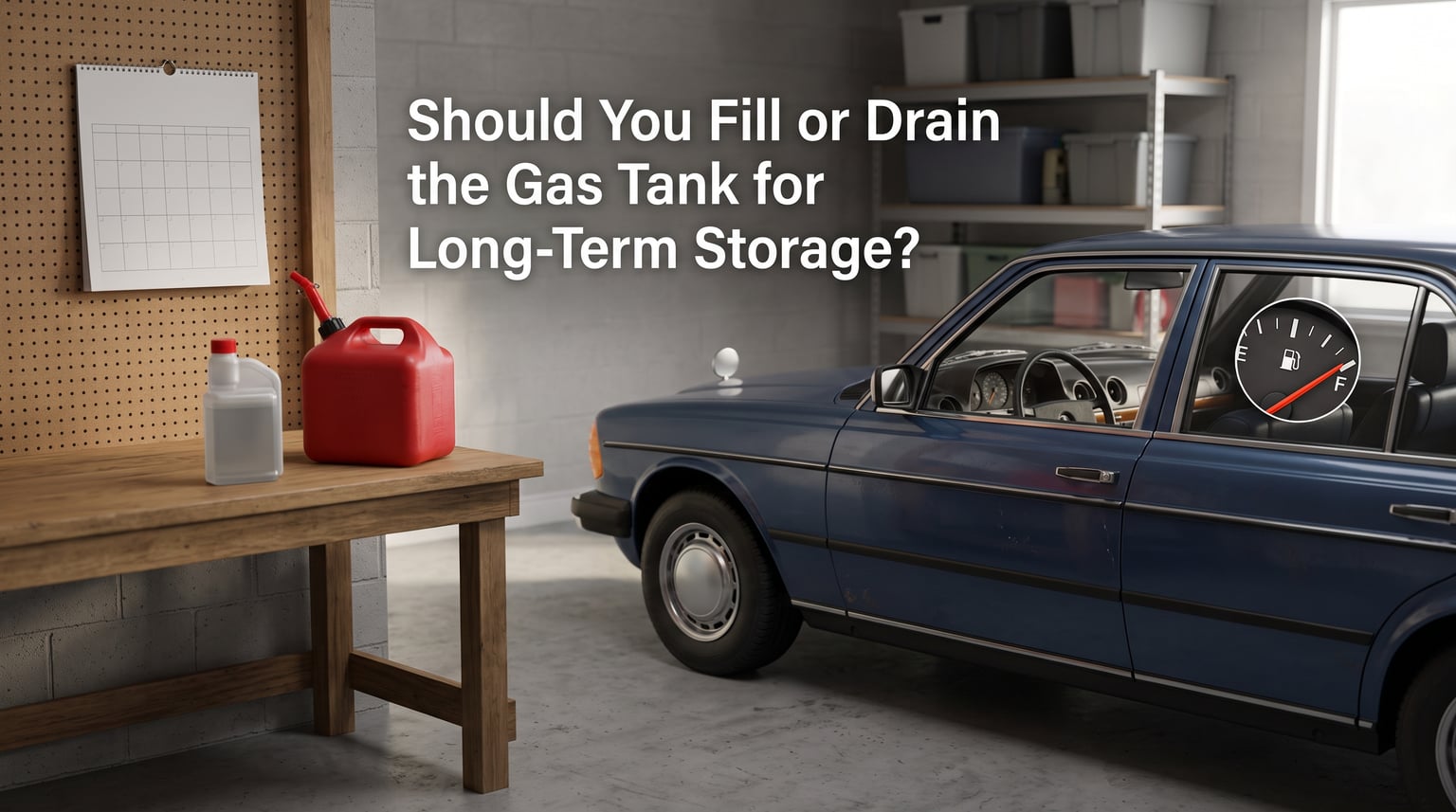
For long-term storage, fill the gas tank and add a fuel stabilizer rather than draining it. A full tank leaves less air space for condensation in the gas tank, which helps limit moisture buildup and internal rust; the stabilizer slows fuel degradation while the vehicle sits.
Draining is generally a special-case task for a tank that must be serviced or kept empty under its manufacturer’s directions. For a car, boat, motorcycle, ATV, or lawn machine that will sit longer than a few weeks, a full treated tank is the practical default.
That simple answer cuts through the conflicting advice owners often see in forums. The details still matter: fuel type, storage duration, climate, and the vehicle manual all affect the preparation work around the tank.
Table of Contents
Fill It: Should You Fill or Drain the Gas Tank for Long-Term Storage?
Fill it for ordinary gas tank long term storage. The goal is not to preserve gasoline forever; it is to reduce exposed air inside the tank and slow the changes that occur in stored fuel.
- Full tank storage
- Leaves little room for humid air, so there is less opportunity for condensation and moisture to collect on bare interior surfaces. It pairs with a correctly measured fuel stabilizer for seasonal storage.
- Empty tank storage
- Removes old fuel but leaves interior surfaces and the fuel system needing careful, dry, manufacturer-directed handling. It makes sense when a repair procedure calls for it, not as the routine answer to winter storage.
A partly filled tank gives you the drawbacks of both paths: a large air space remains, while untreated fuel is still sitting in the system. If I were putting a vehicle away for months, I would avoid that middle ground.
A Full Tank Reduces Condensation and Rust Risk
Condensation is water that forms when moisture in the air meets a surface that has cooled below the air’s dew point. In a tank with substantial empty space, changing temperatures can bring humid air in contact with the tank’s interior.
Less empty space means less air and less moisture available inside. That is why a full tank storage approach is commonly recommended for winter car storage and other seasonal layups.
Water and metal are an unwelcome combination over time. Rust prevention matters because corrosion can affect the tank and can send debris toward the fuel system when the vehicle goes back into service.
A full tank does not make moisture or poor fuel impossible. It is one part of a storage plan, alongside stable fuel, a dry parking location, and following the vehicle maker’s instructions.
Fuel Stabilizer Slows Fuel Degradation
Gasoline changes while it sits. Oxygen exposure contributes to oxidation, and untreated fuel can become less suitable for starting and running an engine after a long idle period.
Add the stabilizer while there is fresh fuel in the tank, using the amount and storage interval printed on that product’s label. Filling afterward helps mix it, and running the engine circulates the treated fuel beyond the tank into the lines and other fuel-system components.
Do not guess at a dosage or assume every additive has the same storage claim. Forum discussions often mention stabilizer products such as STA-BIL, yet label directions and the equipment manufacturer’s guidance are the details to follow.
Stabilizer does not turn stale fuel back into good fuel. If fuel has already sat untreated for an unknown or lengthy period, assess it before starting the engine instead of adding an additive and hoping for a cure.
Ethanol-Free Fuel Is Preferable When Available
Ethanol gas storage deserves extra attention because ethanol can absorb moisture. That concern appears repeatedly in owner discussions, especially for motorcycles, boats, and small engines that sit through a season.
When ethanol-free gasoline is available and approved for your vehicle, many experienced owners prefer it for a layup. It can reduce one source of moisture sensitivity, but it does not remove the need for a full tank, a suitable stabilizer, and proper storage conditions.
If ethanol-free fuel is not available, do not treat that as a reason to drain a routine storage tank. Use fresh fuel, add a compatible stabilizer according to its directions, fill the tank, and avoid extending storage beyond what the vehicle and additive guidance supports.
Boat storage calls for extra care because marine fuel systems may have their own procedures and water-related concerns. Consult the engine and boat manuals before applying any general rule, especially if the equipment has a fuel-water separator or a specified winterization procedure.
Storage Duration Sets the Level of Preparation
Two weeks usually need no special fuel work
For roughly two weeks, a normal parking interval, neither deliberate draining nor a special fill procedure is generally needed. Keep enough fuel for the next drive and follow any vehicle-specific instructions if it is already showing a fuel-system problem.
One month or longer calls for a storage plan
Once a vehicle will sit for more than about 30 days, treat it as long-term gas tank storage. Start with fresh fuel, fill the tank, add stabilizer as directed, and circulate the treatment before parking.
Six months needs a broader vehicle check
At six months, fuel preparation remains important, but the tank is not the only concern. Review the owner’s manual for battery care, tire care, oil service, pest protection, and any instructions for periodic operation or inspection.
Extended storage needs scheduled review
For a layup that stretches well beyond a season, do not assume one preparation day covers every risk. Record the date, fuel type, stabilizer used, and manufacturer-stated storage interval so you can review the vehicle before its next start.
Claims about how long treated gas can last vary by product and conditions. Some owners report much longer success, but a personal report is not a maintenance schedule; use the label and manual as the limit for your equipment.
Prepare the Gas Tank With These Steps
Use this checklist before winter storage, seasonal parking, boat storage, or motorcycle storage. It is designed for a serviceable vehicle with no known fuel leak or running fault.
- Read the owner’s manual first. Look for the maker’s fuel type, storage, winterization, and additive instructions. A marine engine, carbureted motorcycle, and modern car may not call for identical work.
- Start with fresh, appropriate gasoline. Do not top off a tank with fuel you already suspect is degraded. Where appropriate and available, choose ethanol-free fuel for equipment that will sit.
- Add a compatible fuel stabilizer. Measure it for the amount of fuel being treated and follow its instructions exactly. Do not combine additives unless their labels and the vehicle maker say that combination is suitable.
- Fill the tank close to full. The reduced air space helps limit condensation in the gas tank and supports rust prevention. Avoid overfilling or spilling fuel.
- Run the engine after treatment. Let it operate long enough to circulate treated fuel through the system. The required time can vary by vehicle, so rely on its manual where it gives a procedure.
- Park in a dry, secure location. A sheltered location limits weather exposure, while a clean floor and periodic visual checks make leaks or moisture easier to notice.
- Write down what you did. Note the storage date, fuel used, additive, and the next review date. This small record is especially helpful when several vehicles or pieces of equipment are stored together.
- Inspect before returning to service. Check for leaks, unusual fuel odor, visible contamination, and any manufacturer-required pre-start work. If something looks wrong, stop and seek qualified service guidance.
Vehicle and Climate Details Change the Plan
Cars benefit from a full treated tank and whole-vehicle preparation
For a car, the full-tank recommendation is part of car winterization rather than the full job. The owner’s manual may also call for battery, tire, oil, brake, and security steps during long-term parking.
Boats need the engine maker’s winterization sequence
For boats, a full tank with treated fuel is a common starting point, but fuel-system and engine procedures can differ by engine. Water exposure and seasonal storage make the manual particularly important.
Motorcycles and small engines need fuel-system-specific instructions
Motorcycle storage and lawn equipment storage can involve carburetors or other components that have their own maker-directed procedures. Follow the manual instead of transferring a car procedure word for word.
Humid climates increase the case for minimizing tank air space
Humidity supplies the moisture that can later condense, while daily temperature swings can create repeated opportunities for it to form. In a damp garage, shed, marina, or outdoor storage area, dry shelter and a near-full tank matter even more.
Cold weather alone is not the whole issue. The changes between warm and cool conditions, plus the amount of humid air in the tank, are what make moisture buildup a concern.
An Empty Tank Needs Dry, Manufacturer-Directed Handling
There are times when the tank needs to be empty: a repair, a restoration procedure, or a specific manufacturer instruction may require it. In that case, do not leave gasoline in an unsafe container or assume that an empty tank can be forgotten.
Keep the work within the vehicle maker’s service directions and applicable safety rules. A tank that has been drained still needs protection from moisture and corrosion, and fuel removed from it needs approved handling.
For routine seasonal storage, empty tank storage adds work without addressing the main advantages of a full treated tank. That is why the normal recommendation remains fill, stabilize, and document the date.
Bad Fuel Shows Itself Through Changes and Running Problems
Fuel degradation can show up as a hard start, rough running, stalling, or a fuel odor that seems unusual. Visible cloudiness, separated-looking liquid, or debris are also reasons to pause before starting the engine.
These signs do not identify a single fault by themselves. A qualified technician or the manufacturer’s service guidance can help determine whether the fuel, filter, or another part of the fuel system needs attention.
Do not try to solve a suspected long-storage fuel issue by repeatedly cranking an engine. First inspect for leaks and follow the correct service process for the vehicle or equipment.
Common Questions Have Clear Answers
Is it better to store a gas tank full or empty?
For routine long-term storage, store it close to full and treat fresh fuel with a compatible stabilizer. A full tank leaves less air space for condensation and moisture, while an empty tank is mainly for a manufacturer-directed repair or storage procedure.
What is the best way to store gas long term?
Use fresh approved fuel, add a compatible stabilizer exactly as directed, fill the vehicle tank close to full, and run the engine so treated fuel reaches the fuel system. Park in a dry location, record the date, and follow the equipment manual for the stated storage interval and return-to-service checks.
Should I leave my car with a full tank or empty tank for 2 weeks?
For about two weeks, neither draining nor a special storage procedure is usually necessary. Keep a normal usable fuel level and follow your owner’s manual if the vehicle has a fuel-system issue or a specific parking instruction.
Should I fill my gas tank for winter storage?
Yes. For winter storage lasting more than a few weeks, fill the tank close to full and add a compatible fuel stabilizer according to its label. This reduces air space that can contribute to condensation and helps slow fuel degradation.
Is 20 year old gasoline still good?
Do not assume gasoline that old is suitable for use, even if it was stored with an additive. Fuel changes over time, and the safe course is to follow qualified service or local fuel-disposal guidance rather than trying to start an engine with fuel of unknown condition.
Fill, Stabilize, and Check the Manual Before Storage
The answer to gas tank long term storage is straightforward: fill the tank close to full, stabilize fresh fuel, circulate it, and use the manufacturer’s instructions for the rest of the vehicle. That approach addresses the two issues owners worry about most: condensation-driven rust and fuel degradation.
Before you park it, make a short record of the date and treatment used. When the storage period ends, inspect the vehicle before starting it, rather than assuming that time has had no effect.