
Storing a classic car for winter or extended periods brings a hidden threat that catches many owners off guard: mice. These small rodents can cause thousands of dollars in damage by chewing through fuel lines, wiring harnesses, and insulation. A single mouse family can destroy wiring in one weekend. Learning how to keep mice out of a stored classic car means the difference between a car that starts right up in spring and one that needs expensive repairs.
In this guide, I will walk you through the methods that actually work based on testing and real-world experience from classic car owners. You will learn scent-based deterrents, physical barriers, engine bay protection, and a complete pre-storage checklist. The goal is simple: protect your investment so your classic emerges from storage in the same condition it went in.
Table of Contents
Why Mice Target Stored Classic Cars
Mice are drawn to stored vehicles for three main reasons: warmth, shelter, and food. Classic cars sitting idle in barns, garages, or outdoor storage provide the perfect hiding spot. The engine bay stays warm long after shutdown, and the dark enclosed spaces feel safe from predators.
Here is the problem for classic car owners specifically. Many vehicles built from the late 1990s through today use soy-based insulation on wiring harnesses and fuel lines. Mice find this material irresistible. They chew through wires to sharpen their teeth and pull apart insulation for nesting material. I have seen cars with entire wiring harnesses destroyed by a single family of mice nesting over winter.
Older classic cars face similar risks. Mice love to nest in headliners, seat cushions, and trunk liners. They enter through floor vents, cowl vents, and any gap larger than a dime. Once inside, the damage multiplies fast. Mouse urine and droppings create odor problems that are extremely difficult to remove. The smell can linger for years without proper treatment.
Scent-Based Deterrents That Actually Work
Scent deterrents work by overwhelming a mouse’s sensitive nose, making your stored classic car unappealing as a nesting site. These methods work best as part of a layered approach rather than your only defense. Here is what testing and owner experience shows about each option.
Peppermint Oil and Essential Oils
Peppermint oil ranks among the most popular mouse deterrents for stored cars. Mice have extremely sensitive noses and find strong peppermint overwhelming. The key is using real peppermint essential oil, not synthetic fragrances.
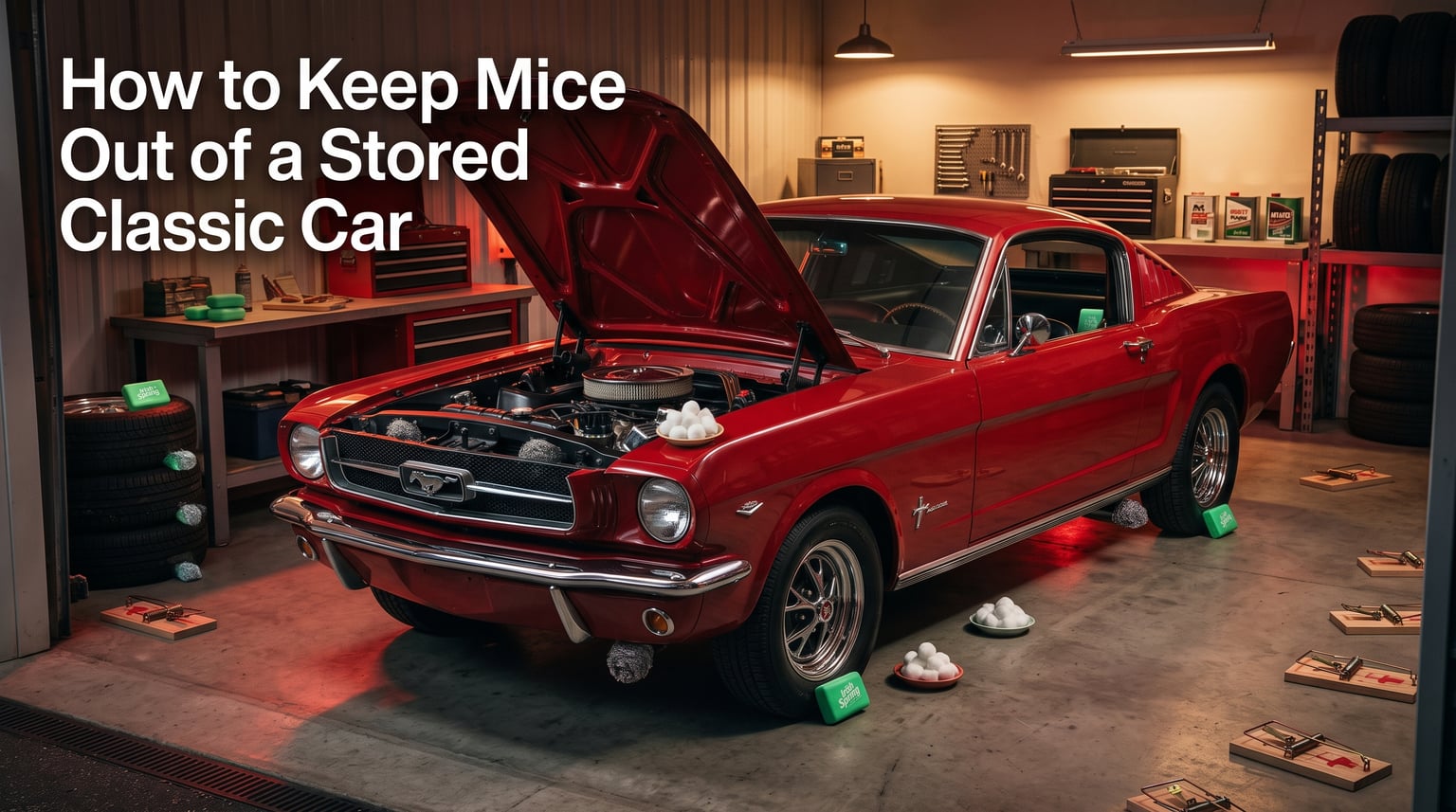
I recommend soaking cotton balls in pure peppermint oil and placing them around the engine bay, under seats, and in the trunk. Replace them every few weeks as the scent fades. Some owners mix peppermint with cinnamon and clove oils for an even stronger deterrent blend. The downside is that peppermint oil needs regular refreshing to stay effective.
Dryer Sheets
Bounce dryer sheets and similar fabric softener sheets are a classic trick passed down through generations of car collectors. The strong scent supposedly repels mice while keeping interiors fresh. Owners commonly stuff dryer sheets into the cabin air intake, glove box, and under seats.
Here is the honest truth about dryer sheets: results vary widely. Some owners swear by them. Others report finding mouse nests built directly on top of the sheets. I recommend using dryer sheets as a supplement to other methods, not your primary defense. The scent fades faster than peppermint oil, so check and replace them monthly during storage.
Irish Spring Soap and Mothballs
Irish Spring soap has a devoted following among classic car owners. The strong soap scent repels mice and the bars last months without replacement. Many owners grate the soap into small containers or hang mesh bags with soap chunks under the hood.
Mothballs work on a similar principle but come with drawbacks. The chemical odor repels mice effectively but also penetrates upholstery and headliners. Getting that smell out later requires extensive cleaning. Mothballs also pose toxicity risks to pets and children. Use them only in well-ventilated barn storage away from living areas.
What Smells Do Mice Absolutely Hate?
Mice despise strong, spicy, and minty aromas. The most effective scents for repelling mice include peppermint oil, cinnamon, cayenne pepper, cloves, ammonia, and the chemical odor of mothballs. Ammonia mimics predator urine and triggers avoidance behavior. Peppermint and cinnamon overwhelm their sensitive olfactory system. Cayenne and chili peppers irritate their nasal passages.
For classic car storage, I suggest combining multiple scent deterrents rather than relying on just one. Place peppermint cotton balls in the engine bay, Irish Spring soap under seats, and cayenne pepper sachets near entry points. This multi-scent approach makes your car unappealing from every angle.
Physical Barriers for Hard-to-Reach Areas
Physical barriers block mice from entering your classic car entirely. These methods require more effort upfront but provide the most reliable protection. Mice can squeeze through gaps as small as a dime, so thorough sealing matters.
Steel Wool and Copper Mesh
Steel wool ranks among the most effective ways to block mouse entry points. Mice cannot chew through the metal fibers, and the sharp edges deter them from trying. I use coarse-grade steel wool packed tightly into any opening around the engine bay, firewall, and floor vents.
Copper mesh offers similar protection with added durability. It does not rust like steel wool, making it better for long-term storage or barn environments. Copper mesh costs more but can be removed and reused year after year. Pack it into exhaust pipes, air intake vents, and any body gaps where wiring passes through the firewall.
Anti-Mouse Tape
Anti-mouse tape combines adhesive backing with an abrasive surface that mice cannot chew through. The tape wraps around wiring harnesses, fuel lines, and hoses that mice commonly target. This product goes by various brand names but works on the same principle: create a physical shield mice cannot penetrate.
Apply anti-mouse tape to vulnerable wiring in the engine bay before storage. Focus on fuel injector wiring, ignition coil leads, and any exposed harness sections. The tape stays in place without damaging wires and removes cleanly in spring. This method adds protection specifically where mice tend to cause the most expensive damage.
Aluminum Flashing and Metal Shields
For serious protection, some owners install aluminum flashing around the perimeter of their stored classic. This creates a metal barrier mice cannot climb or chew through. The method works best for cars stored outdoors or in barns with heavy rodent pressure.
Aluminum flashing costs more and requires installation effort, but it provides season after season of protection. Wrap the flashing around the lower body panels or create a barrier on the ground around the vehicle. This approach physically prevents mice from reaching the car at all.
Engine Bay Protection Techniques
The engine bay attracts mice more than any other part of a stored classic car. Warmth lingers in engine blocks and exhaust manifolds. Wires and hoses provide ideal chewing surfaces. Protecting this critical area requires a focused strategy.
Deep Clean Before Storage
Start with a thoroughly cleaned engine bay. Remove all leaves, debris, and accumulated grime. Mice are drawn to cluttered spaces where they can hide. A clean engine bay offers fewer hiding spots and makes mouse activity easier to spot during storage checks.
Pressure wash or steam clean the engine, then let it dry completely. Inspect wiring for existing damage and make repairs before storage. A clean engine also makes deterrent applications more effective. Peppermint oil and anti-mouse tape adhere better to clean surfaces.
Leave the Hood Open
This simple trick surprises many car owners. Mice prefer dark, enclosed spaces for nesting. By leaving the hood propped open, you remove the cozy environment they seek. Light floods the engine bay and eliminates the sense of security mice want.
I know leaving the hood open feels counterintuitive when you want to protect your car. But classic car collectors have used this method for decades. Combine an open hood with scent deterrents and physical barriers for maximum effect. If you use a car cover, leave the hood exposed or prop it open underneath the cover.
Build a Repellent Perimeter
Create a circle of protection around your stored classic car. Place snap traps along the walls of your storage space. Add scent deterrent sachets around the perimeter of the vehicle. This approach intercepts mice before they reach the car itself.
For barn storage, extend this perimeter concept to the entire building. Place traps along interior walls, near doors, and at potential entry points. The goal is reducing the mouse population before they discover your stored vehicle.
Interior Protection Tips
The passenger cabin and trunk offer mice ideal nesting spots. Upholstery, carpet, and headliner materials provide everything mice need to build comfortable nests. Protecting the interior requires a different approach than engine bay defense.
Remove all food sources before storage. Check under seats, in glove boxes, and in trunk compartments for snacks, candy, or garbage. Even a single french fry or cracker crumb can attract mice. Vacuum thoroughly and wipe down all surfaces.
Remove the cabin air filter and block the intake with steel wool or copper mesh. This prevents mice from entering through the ventilation system. Place dryer sheets or peppermint cotton balls under seats and in door pockets. Prop open the trunk and glove box to eliminate dark hiding spots.
Consider removing seat cushions and storing them separately in sealed plastic bins. This eliminates prime nesting material and makes the interior less appealing. For long-term storage, some owners even remove the headliner or coat it with deterrent spray.
Traps and Poison Methods
Active elimination methods provide another layer of defense. Traps and poison bait stations reduce the mouse population in and around your storage area. These methods work best combined with deterrents and barriers rather than alone.
Snap Traps with Peanut Butter
Snap traps remain the most reliable mouse elimination method. They kill instantly and are inexpensive to deploy. Peanut butter works better than cheese as bait. Mice find the smell irresistible and the sticky texture prevents them from stealing bait without triggering the trap.
Place snap traps along walls where mice travel. Mice use walls as guides and rarely cross open spaces. Set traps at the base of walls near your stored classic, along entry points to the storage area, and in corners. Check traps weekly and reset as needed.
I recommend using at least six to eight traps around a single stored vehicle. Position them in pairs for better catch rates. Mice sometimes jump over single traps but struggle to avoid doubles. Wear gloves when handling traps and dead mice to avoid disease exposure.
Poison Bait Stations (D-Con)
Poison bait stations like D-Con offer a low-maintenance alternative to snap traps. Mice enter the station, consume poison, and die later elsewhere. These stations are weather-resistant and can be placed outdoors around storage buildings.
The main drawback of poison bait is where the mice die. They may crawl into your car to die, creating odor problems. Poison also poses risks to pets and wildlife. Use bait stations only in secure areas where non-target animals cannot access them. Check stations monthly and refill as needed.
Ultrasonic Devices
Ultrasonic repellent devices emit high-frequency sound waves that supposedly drive mice away. The concept sounds appealing: plug in a device and walk away. However, testing shows mixed results. Some mice become accustomed to the sound over time.
Ultrasonic devices work best in enclosed spaces where sound reflects effectively. Open barns and large garages reduce their effectiveness. I consider ultrasonic devices a supplement rather than a primary solution. Use them alongside scent deterrents and physical barriers for best results.
Barn vs Garage Storage: Key Differences
Where you store your classic car dramatically affects your mouse protection strategy. Indoor garages face less pressure than barns and outdoor storage. Understanding these differences helps you choose the right combination of methods.
Barn storage presents unique challenges. Mice already live in most barns, and their populations grow unchecked without intervention. Barns offer countless hiding spots and entry points. The open environment means scent deterrents dissipate faster. For barn-stored classics, I recommend a comprehensive approach: physical barriers like copper mesh in all openings, multiple snap trap lines around the vehicle, and Irish Spring soap or mothballs for persistent scent.
Indoor garages offer better starting conditions but still need protection. Seal any gaps in walls, doors, and foundations. Weatherstrip garage doors thoroughly. Use snap traps along walls and scent deterrents under the hood. Check the garage for mouse activity regularly by looking for droppings and chew marks.
Outdoor storage under car covers faces the highest rodent pressure. Ground-dwelling mice easily access the vehicle. Use aluminum flashing barriers on the ground and elevate the car on jack stands if possible. Check daily or twice weekly during peak mouse activity in fall and winter.
Signs of Mouse Activity to Watch For
Catching a mouse problem early prevents extensive damage. Know what to look for when checking your stored classic car. Inspect weekly during storage and address any signs immediately.
Mouse droppings are the most obvious sign. Look for small black pellets about the size of rice grains. Check the engine bay, under seats, in the glove box, and throughout the trunk. Droppings indicate active infestation requiring immediate action.
Chewed materials reveal where mice have been. Inspect wiring harnesses for exposed copper or missing insulation. Check fuel lines for bite marks. Look for shredded paper, fabric, or insulation that mice have gathered for nesting.
Unusual odors signal mouse activity. A musky, ammonia-like smell indicates mouse urine. Nests create their own distinctive odor. If you detect either smell, search thoroughly for the source and address it before it worsens.
Tracks and rub marks appear along walls and entry points. Mice leave greasy marks where they travel repeatedly. Check for tail drag marks in dusty areas. These signs reveal travel patterns for better trap placement.
Pre-Storage Mouse-Proofing Checklist
Follow this step-by-step checklist before putting your classic car into storage. A thorough preparation prevents most mouse problems.
1. Clean the entire vehicle including engine bay, interior, and trunk. Remove all food, trash, and debris.
2. Seal all entry points with steel wool or copper mesh. Focus on floor vents, cowl vents, exhaust pipes, and body gaps.
3. Apply anti-mouse tape to vulnerable wiring harnesses and fuel lines in the engine bay.
4. Place scent deterrents in multiple locations: peppermint cotton balls under the hood, Irish Spring soap under seats, dryer sheets in the glove box.
5. Prop open the hood, trunk, and glove box to eliminate dark hiding spots.
6. Remove cabin air filter and block the intake with copper mesh.
7. Set snap traps along walls near the vehicle and at entry points to the storage area.
8. Document baseline conditions with photos for comparison during storage checks.
9. Schedule weekly or bi-weekly inspection visits to check for activity and refresh deterrents.
FAQs
What is the best thing to keep mice out of stored cars?
The most effective approach combines multiple methods: steel wool or copper mesh to block entry points, peppermint oil or Irish Spring soap as scent deterrents, and snap traps placed around the vehicle. No single method works as well as a layered defense that addresses entry, deterrence, and elimination.
What smell do mice absolutely hate?
Mice hate strong scents including peppermint oil, cinnamon, cayenne pepper, cloves, ammonia, and mothballs. Peppermint oil ranks among the most effective for car storage because it is pleasant for humans but overwhelming for mice. Irish Spring soap provides longer-lasting scent protection.
How do the Amish get rid of mice?
Traditional Amish methods focus on prevention and natural deterrents. They use strong-smelling soap like Irish Spring, peppermint plantings around structures, and maintain barn cats for rodent control. These approaches emphasize consistency and multiple barriers rather than quick fixes.
How to keep rodents out of your abandoned car?
For vehicles stored long-term or abandoned, use copper mesh to permanently seal all entry points including exhaust and intake. Place multiple snap traps in lines around the perimeter. Remove all interior soft materials that attract nesting. Consider installing metal flashing barriers at ground level for outdoor storage.
Do dryer sheets keep mice away from cars?
Dryer sheets show mixed results. Some owners report success while others find mice nesting directly on the sheets. The scent fades quickly, reducing effectiveness over time. Use dryer sheets as a supplement to other methods like steel wool barriers and snap traps rather than your primary defense.
How often should I check on a stored classic car for mouse activity?
Check your stored vehicle weekly during fall and winter when mice are most active. Look for droppings, chewed wires, nests, and unusual odors. Refresh scent deterrents and reset traps during each visit. For barn-stored cars, increase frequency to twice weekly during peak rodent season.
Conclusion
Protecting your classic car from mice during storage requires a multi-layered approach. Block entry points with steel wool or copper mesh. Use scent deterrents like peppermint oil and Irish Spring soap. Deploy snap traps around your vehicle and storage area. Check regularly for signs of activity and address problems immediately.
Learning how to keep mice out of a stored classic car takes some preparation but saves significant money and frustration. A few hours of prevention work prevents thousands in wiring repairs and interior restoration. Follow the checklist, stay vigilant with weekly inspections, and your classic will emerge from storage ready to hit the road.